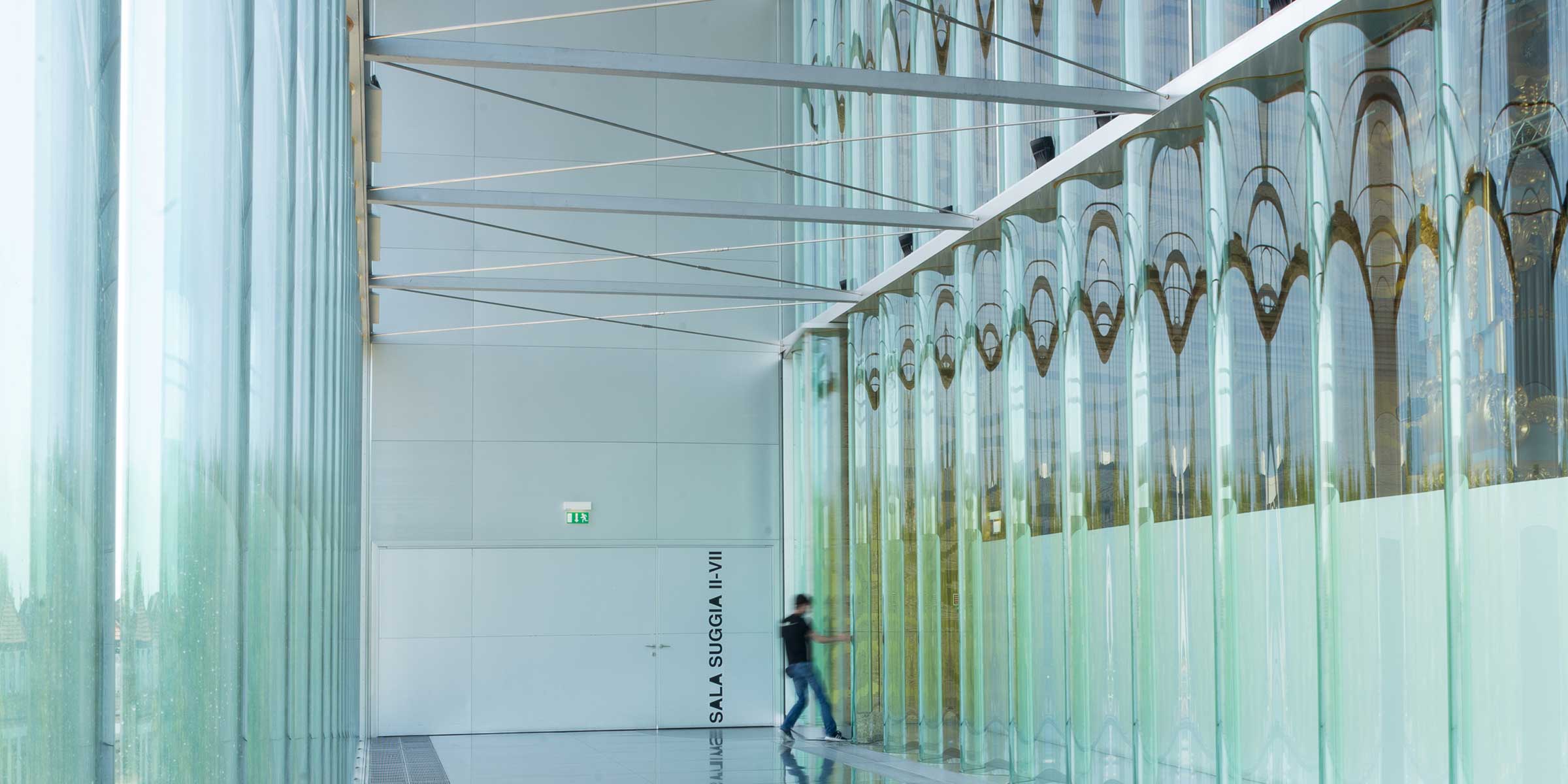
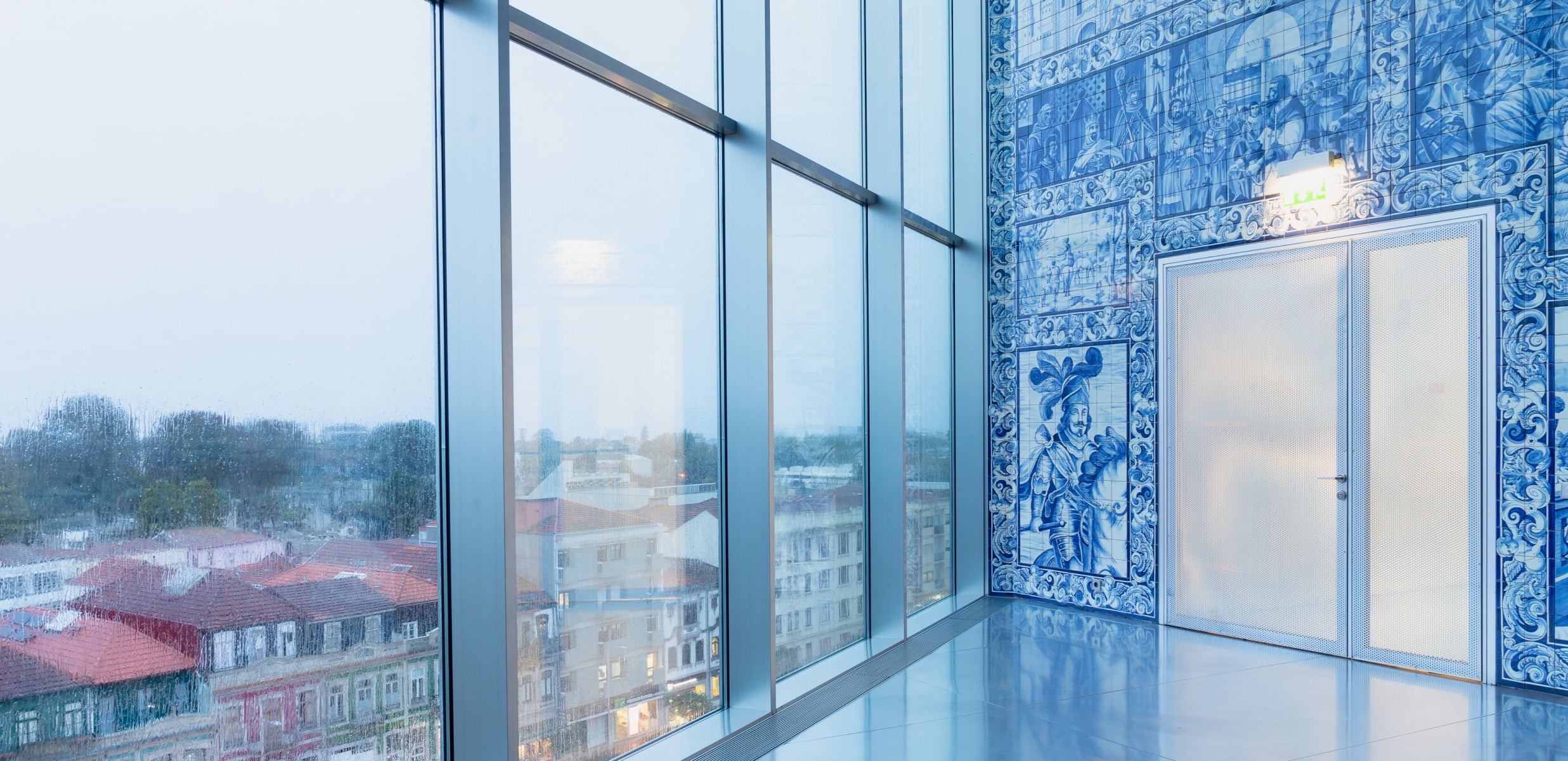
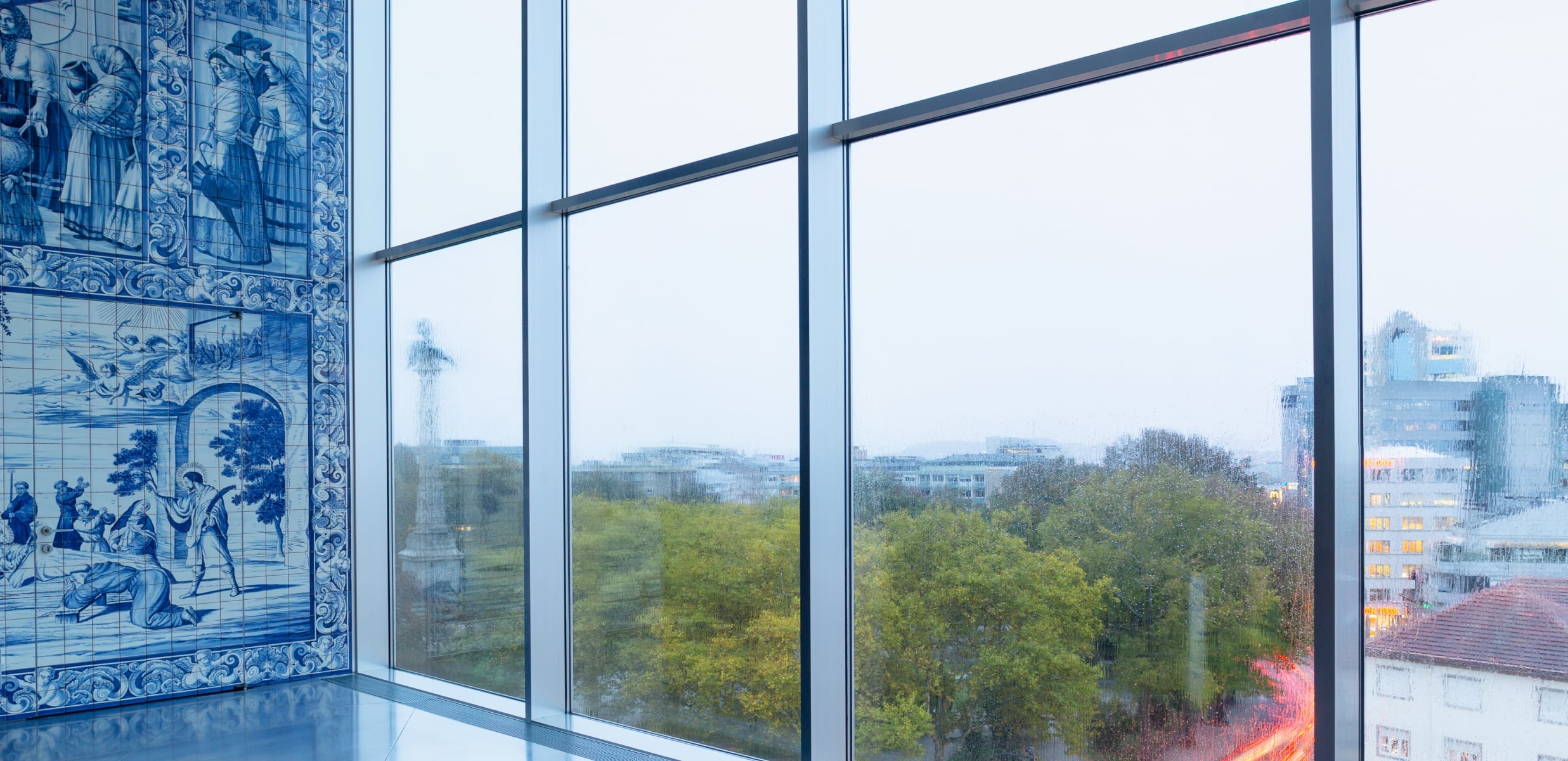
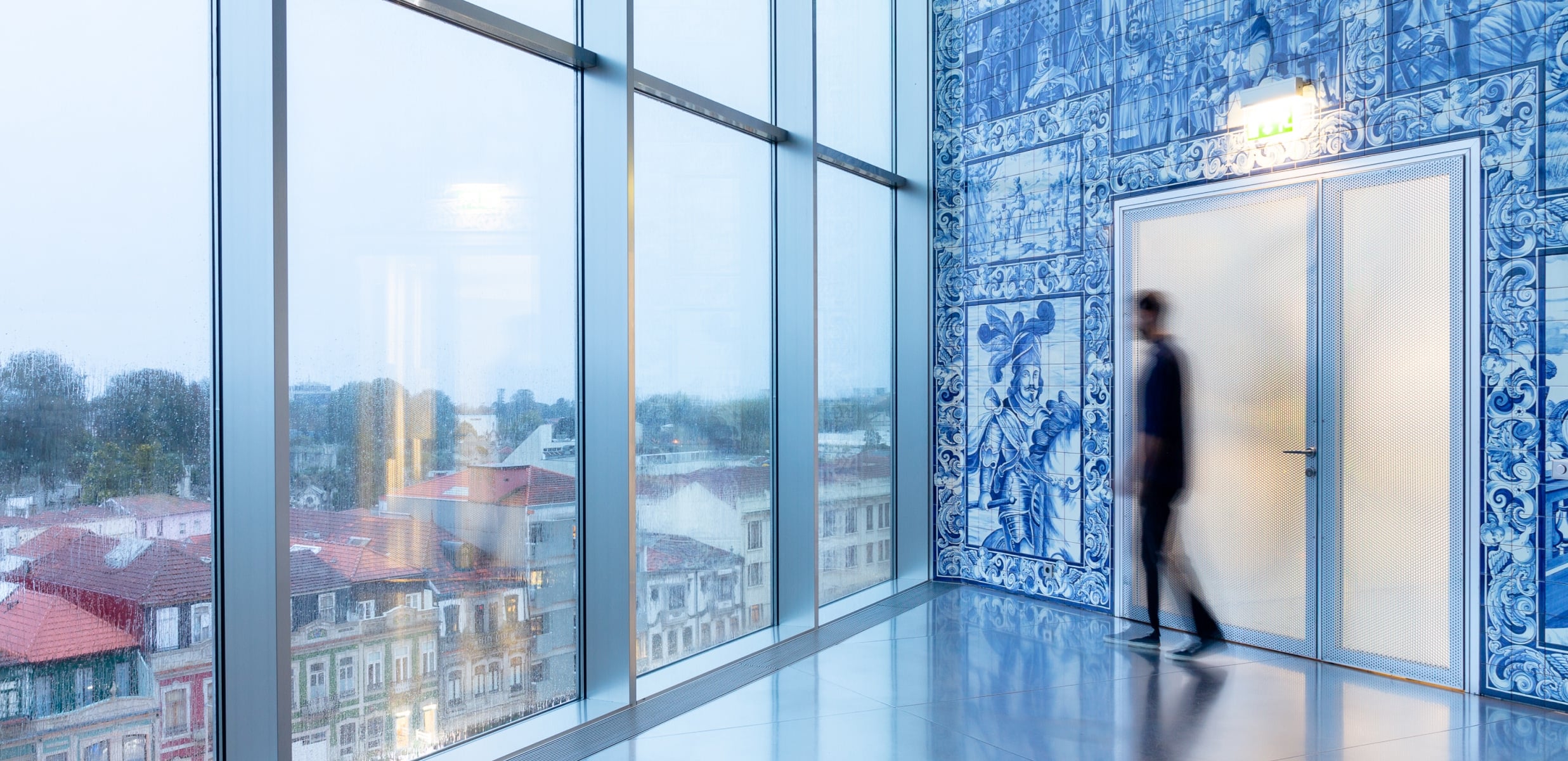
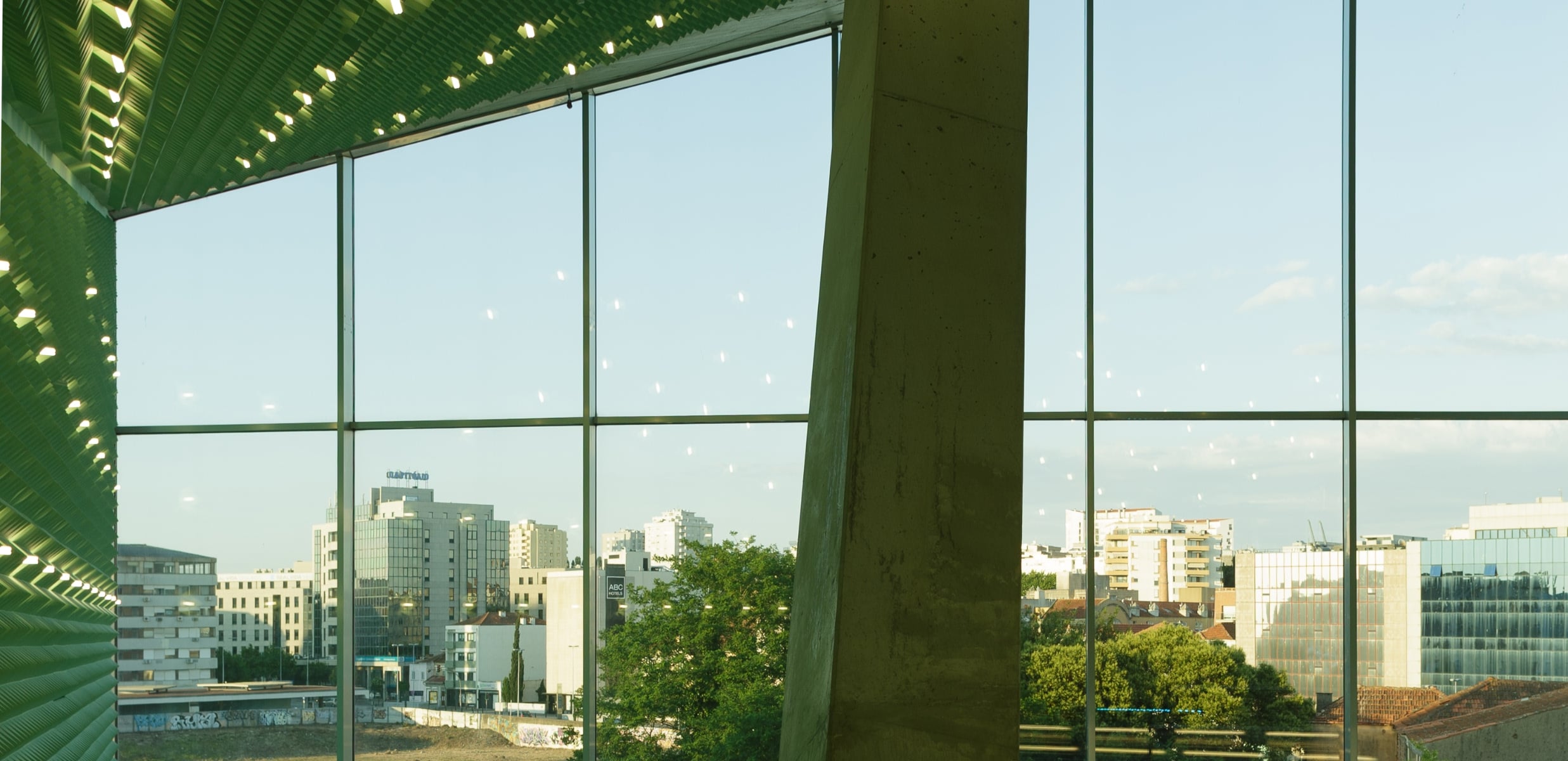
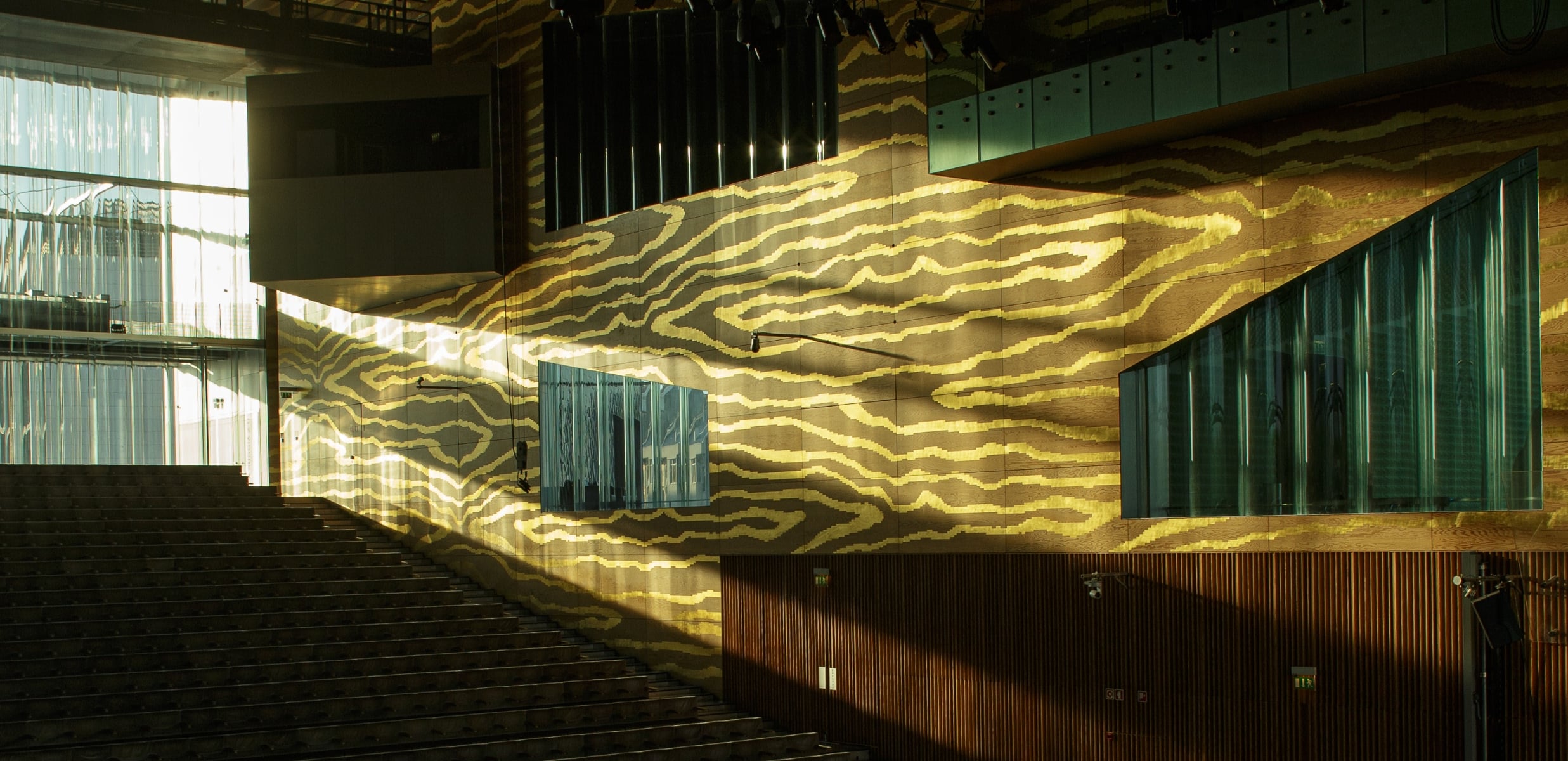
The East and West Foyers, both with a towering ceiling height (about 17 meters), are a crucial space for the natural light process in the Sala Suggia, receiving the full incidence of sunlight through large windows with wavy glass panels that Rem Koolhaas had used in other projects, but never in such an ambitious way.
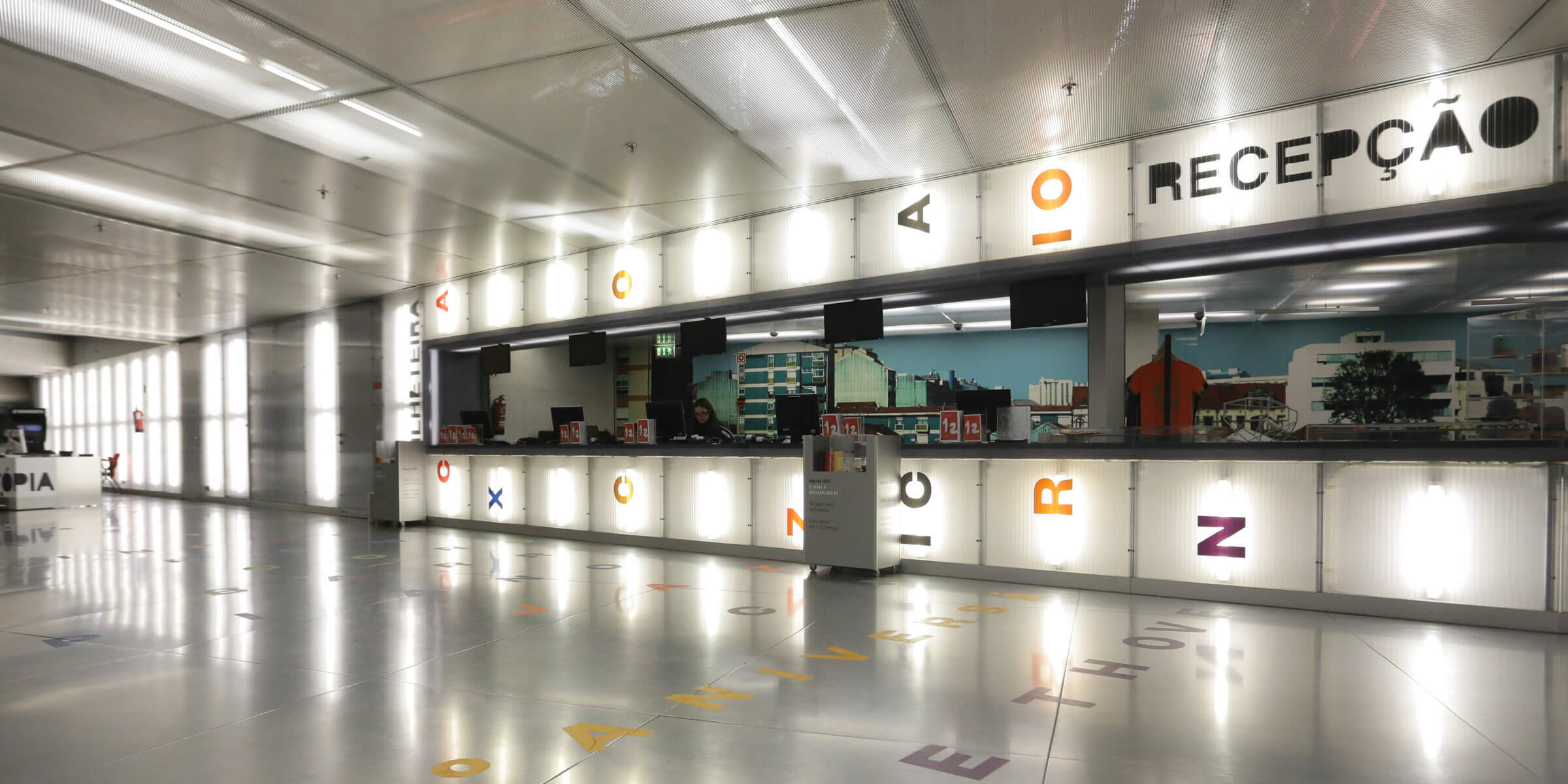
Immediately following the main entrance, visitors access the first functional space of the building, which includes the Ticket Office, Reception, Shop, and Cloakroom, and pass directly underneath the heart of the Casa, the Suggia Hall. In the Lobby, visitors have the opportunity to observe music rehearsals through the perforated aluminium on the wall opposite the counter, which leads them to understand one of the most symbolic objectives of the building, which is to involve the visitor in the musical process preceding any public presentation. On the other side, in six small rehearsal rooms, visible to passers-by, it is possible to observe soloists and small ensembles.
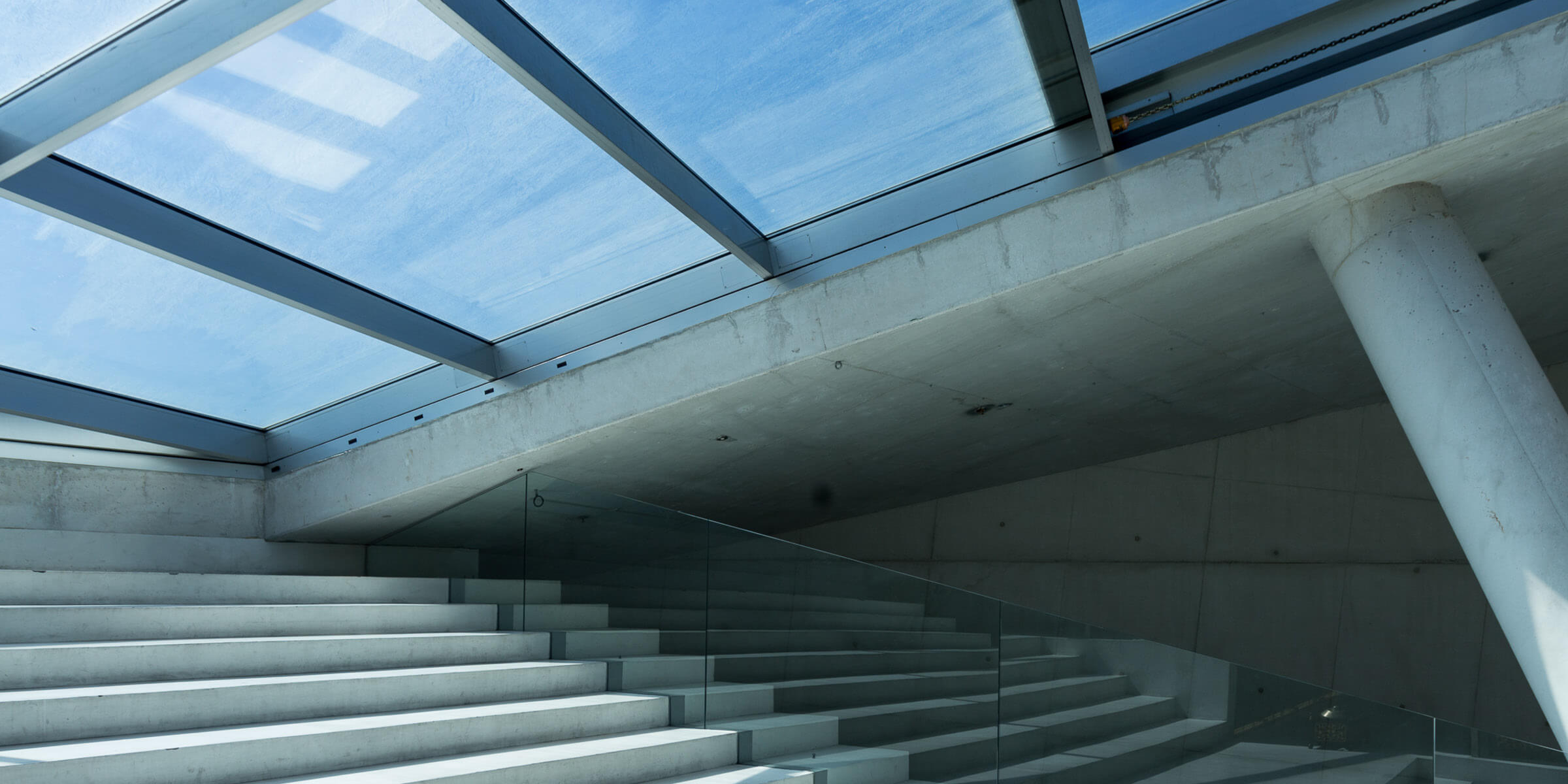
Located above Room 2, the VIP Terrace was originally designed as a technical area inaccessible to visitors. However, during the construction phase, Rem Koolhaas ultimately decided to include this space as an indoor plaza as part of the public access of the Casa.
On the ceiling, a large skylight, which can be mechanically opened, makes the space hybrid, so it is neither fully interior nor exterior, prompting different interpretations depending on whether the window is open or closed.
The terrace is used to support the VIP Room and as a venue for meetings or discussions with composers, as well as lectures on music and architecture.
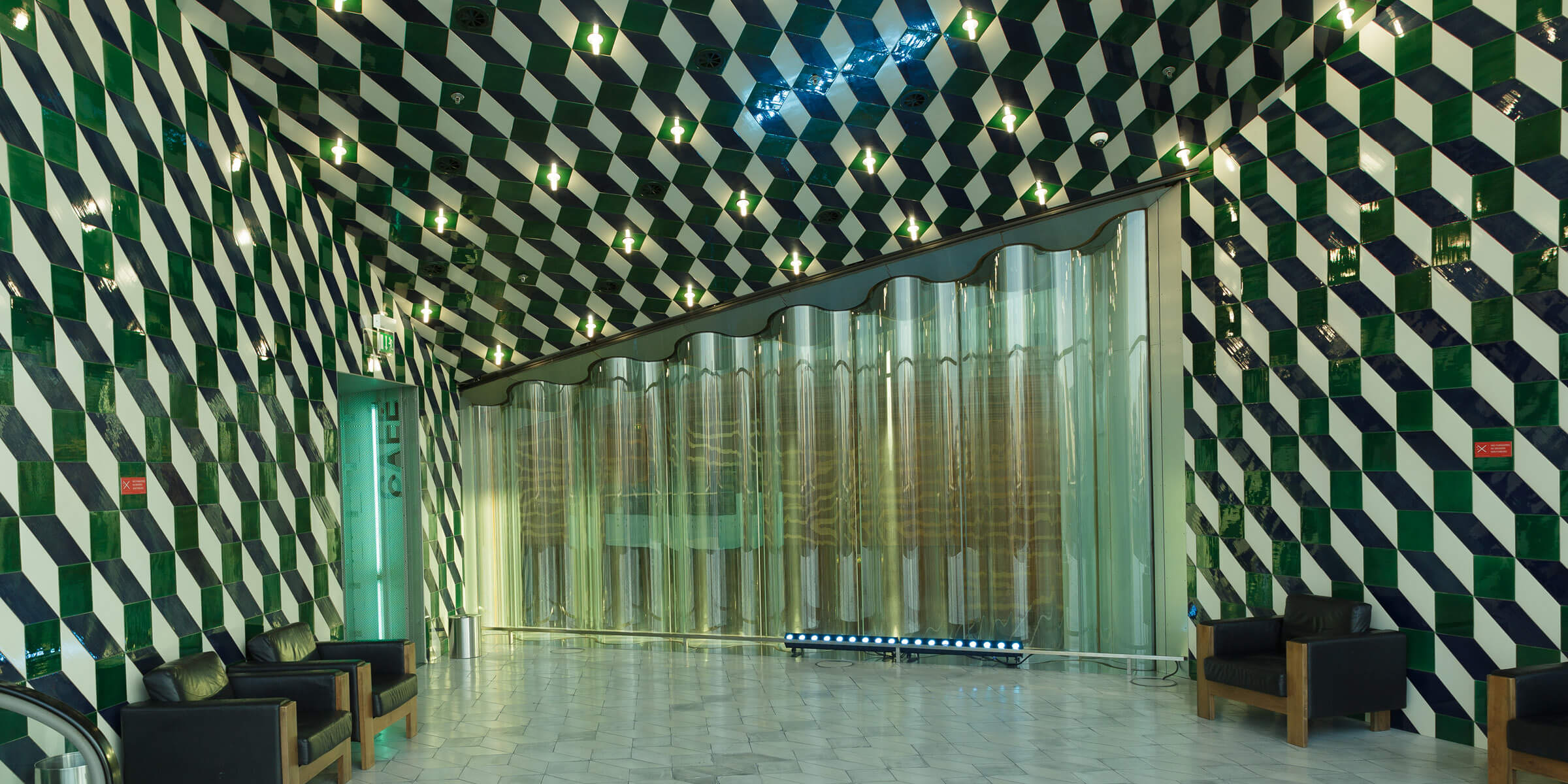
The Renaissance Room is, first and foremost, a passageway that connects two essential spaces in the building: the Cybermusic and the West Foyer.
The name of the room comes from the tiles that line its walls, featuring a pattern created by two parallelograms and a square, in blue, which is green and white. The inspiration likely came, on the one hand, from the facades of the city itself, which in the 19th century adopted similar patterns. In addition, the optical illusion created by the mosaic of tiles evokes the European Renaissance, a period of cultural, artistic, and scientific explosion when the use of perspective in painting was truly developed. There is also a possible reference to Op Art, an artistic movement in the 1960s that worked with natural effects of cavalier and isometric perspective to create optical illusions, sensations of volume, and optical vibrations so strong they suggested movement.
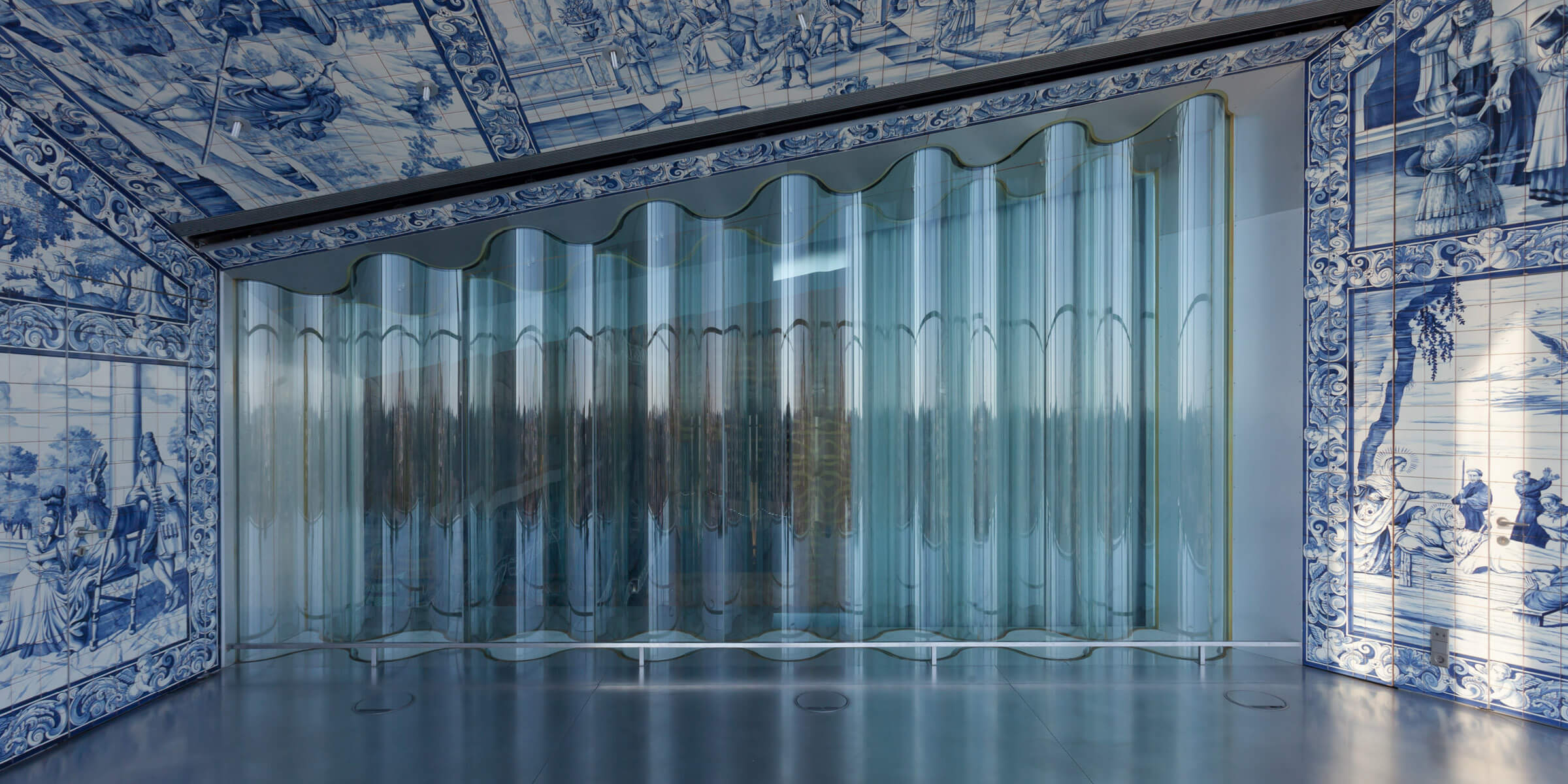
Sala VIP is a multi-purpose space, primarily dedicated to performances by small groups, installations or ceremonies. In this room, Rem Koolhaas has paid tribute to Portuguese azulejos, an art form he also learnt in the Netherlands. Each of its panels reproduces originals installed in various museum spaces in Portugal and the Netherlands. This space was designed with the aim of creating a presentation hall, a calling card for Casa da Música. It is mainly used for small events such as press conferences, receptions, cocktail parties or album launch events.
Initially, this space was designed to build a bridge between Portuguese and Dutch cultures.
Indeed, in the early 16th century, the Dutch – particularly in the Delft region – were greatly influenced by the ceramists, painters and potters fleeing the Inquisition, which was eventually established in Portugal in 1536. This left an indelible mark on the ceramics of both countries, shaping the parallel development of this art form until the mid-17th century. Moreover, to pay tribute to both cultures, around half of the tiles (by surface area) are copies of Portuguese tiles, and the other half are copies of Dutch tiles.
The colour of the azulejos is Delft light blue, also known as ‘Light Blue de Delft’.
The azulejos were painted at the Viúva Lamego factory, one of Portugal’s most traditional ceramic factories. Fernando Humberto, the coordinator of the team of painters working on these panels, left his signature hidden in the grass on the Portuguese panel depicting the Battle of the Conquest of Ceuta, in which Prince Henry appears.
On the Dutch panel Refeição no Terraço (Meal on the Terrace) by Willem Van der Kloet, there is an azulejo (the base of the plate) which is placed upside down, alluding to the following theory: perfection lies with God, so the work of men cannot be perfect.
This room offers a panoramic view of the city of Porto, stretching from the spire of the Torre dos Clérigos to the Atlantic Ocean, revealing the various stages of Porto’s urban development.
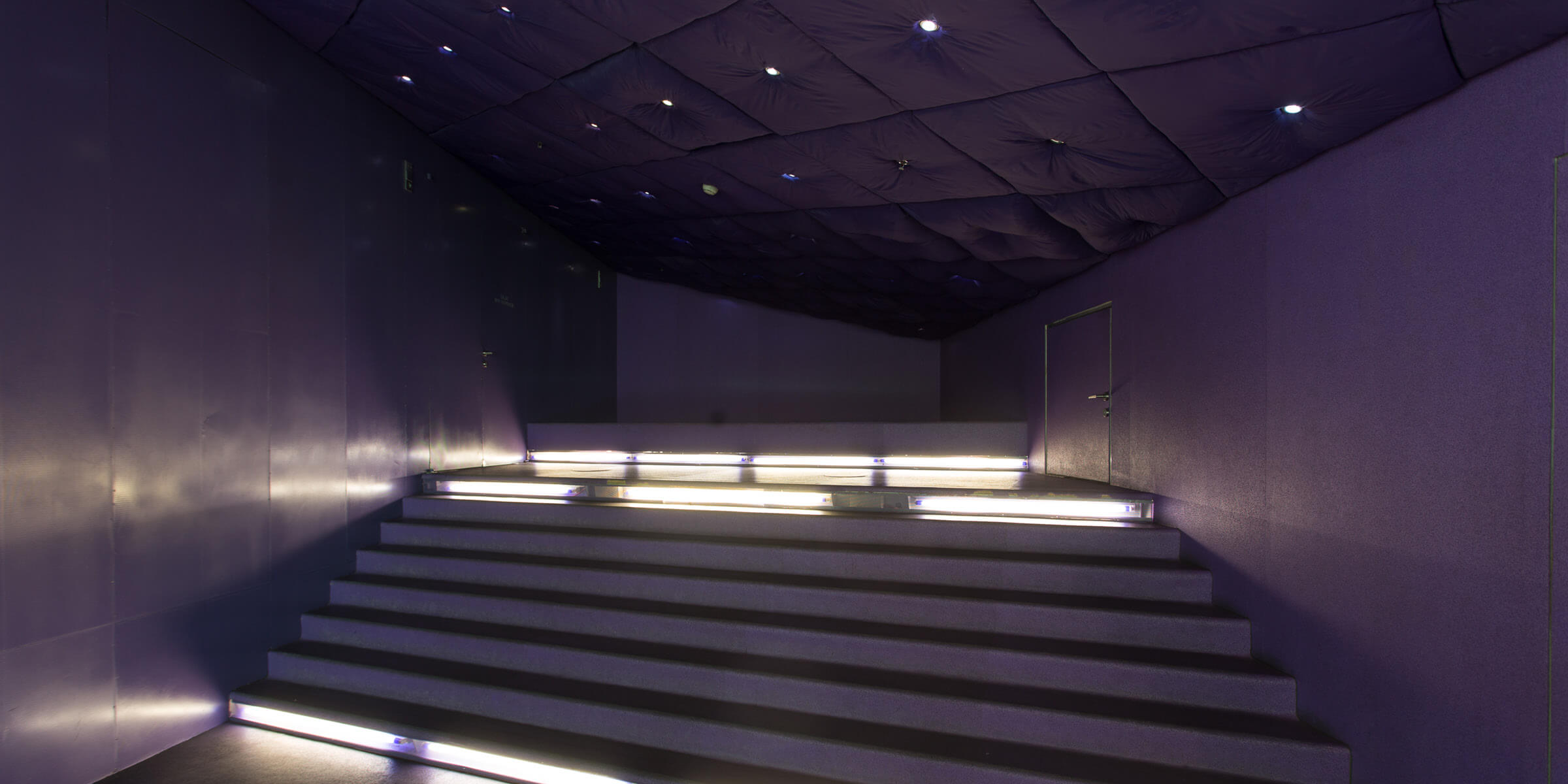
Created parallel to the Orange Room, the Purple Room serves a similar purpose of providing support to the activities of the Educational Services. The purple colour of the room seeks to convey a sense of relaxation and calm.
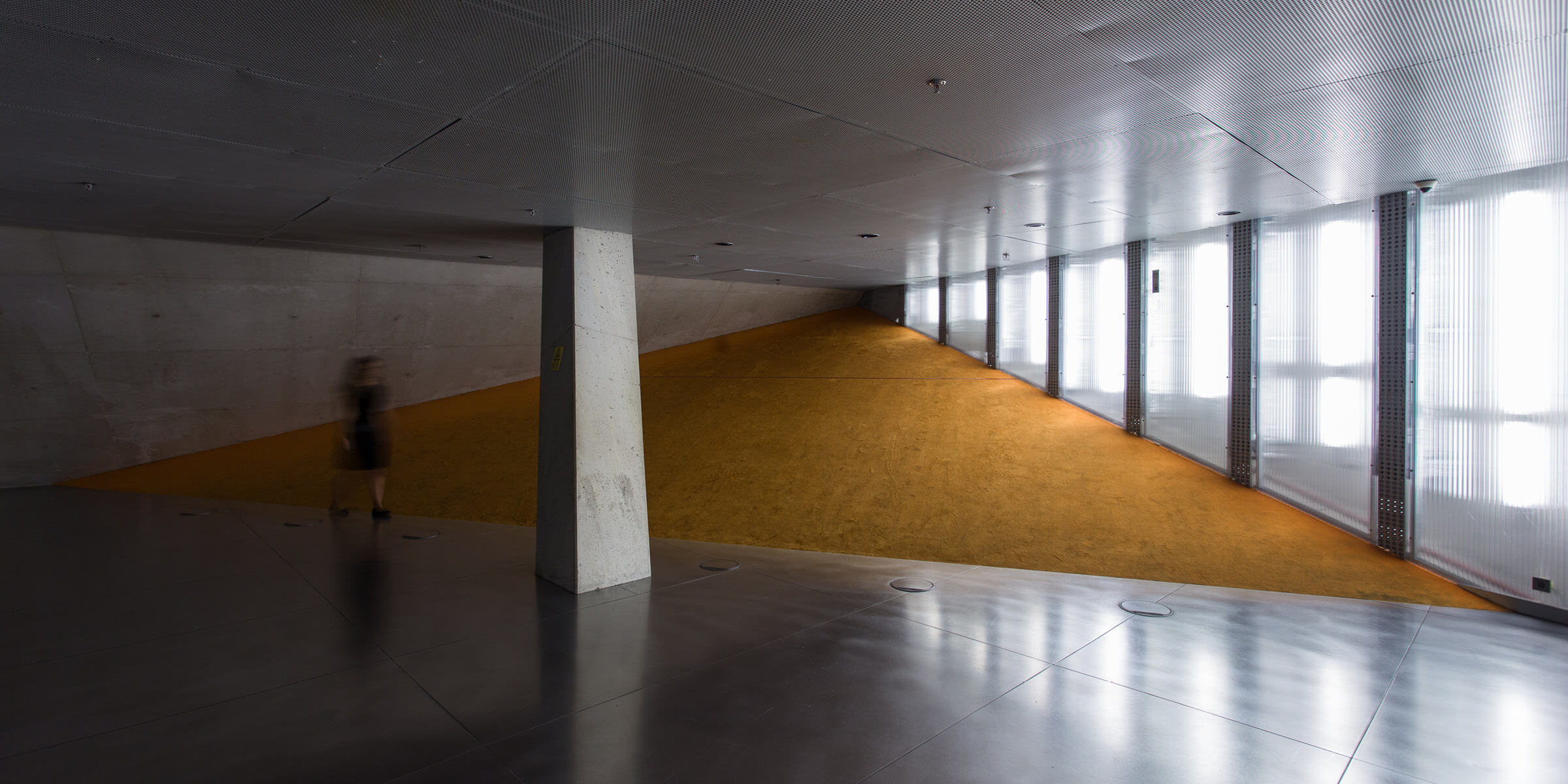
Developed, like other spaces in the house, with a multifunctional logic, the Orange Room is primarily used to support the Educational Service. It is one of the few spaces in Casa da Música accessible to the public where there is no direct natural light. In compensation, a play of lights has been applied that projects onto the carpeted ramp – the main attraction of the room for children – playing with the concept of a trompe l’oeil window. The orange of the carpet itself conditions the emotions of those entering the room – conveying a sense of proactivity, energy, and assisting the cognitive process of participants in the numerous workshops held there.
In the Orange Room, there is also an instrument called the Sonorium, an integral part of the Casa da Música’s Hot Spots. The Sonorium reacts not only to the presence but also to the position of a body, variables that influence the sounds previously introduced into its system. The choreographed movement of people allows for the creation of melodic spaces, a fact that proves to be very useful in the psychomotor development of young children.
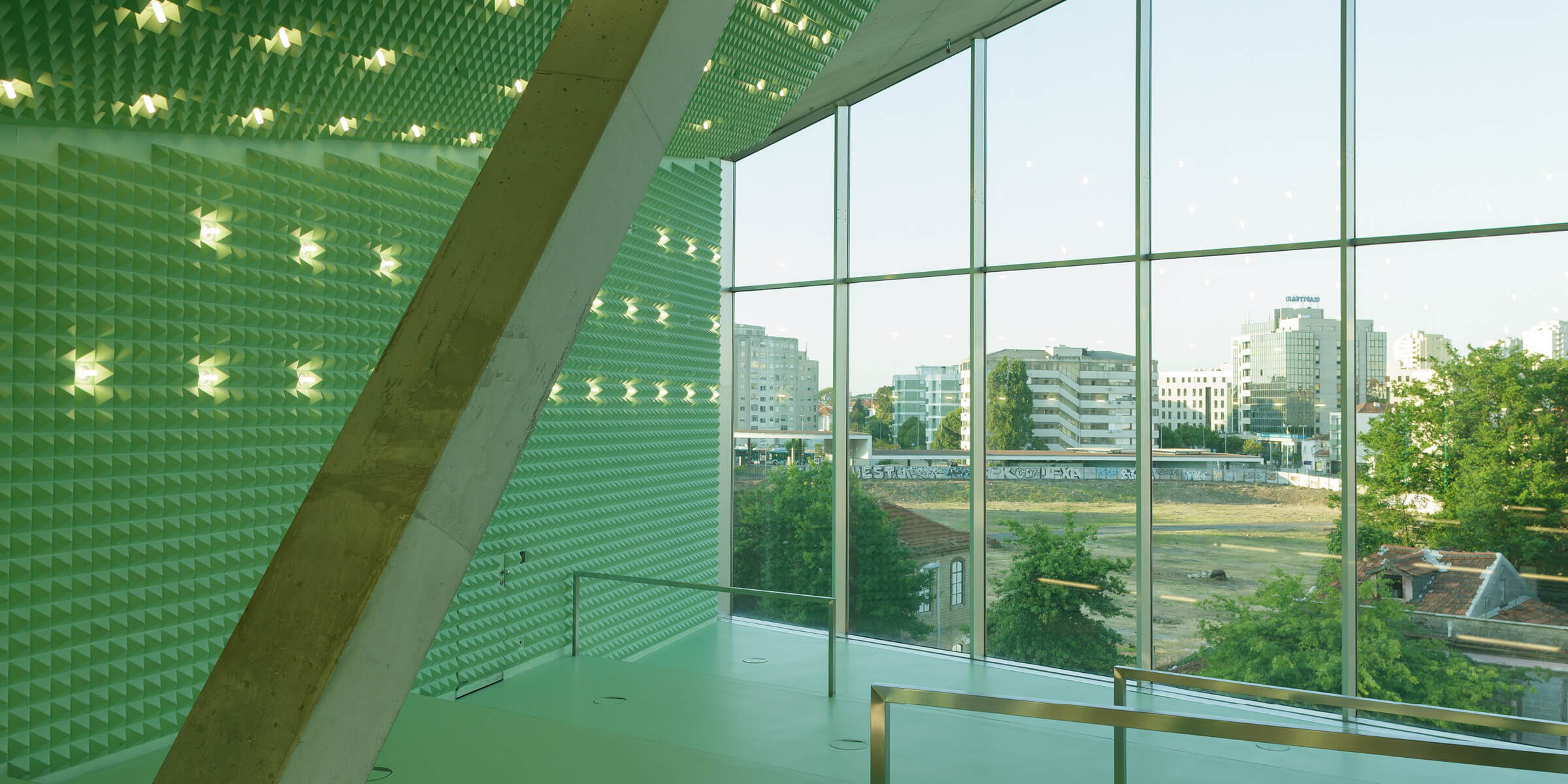
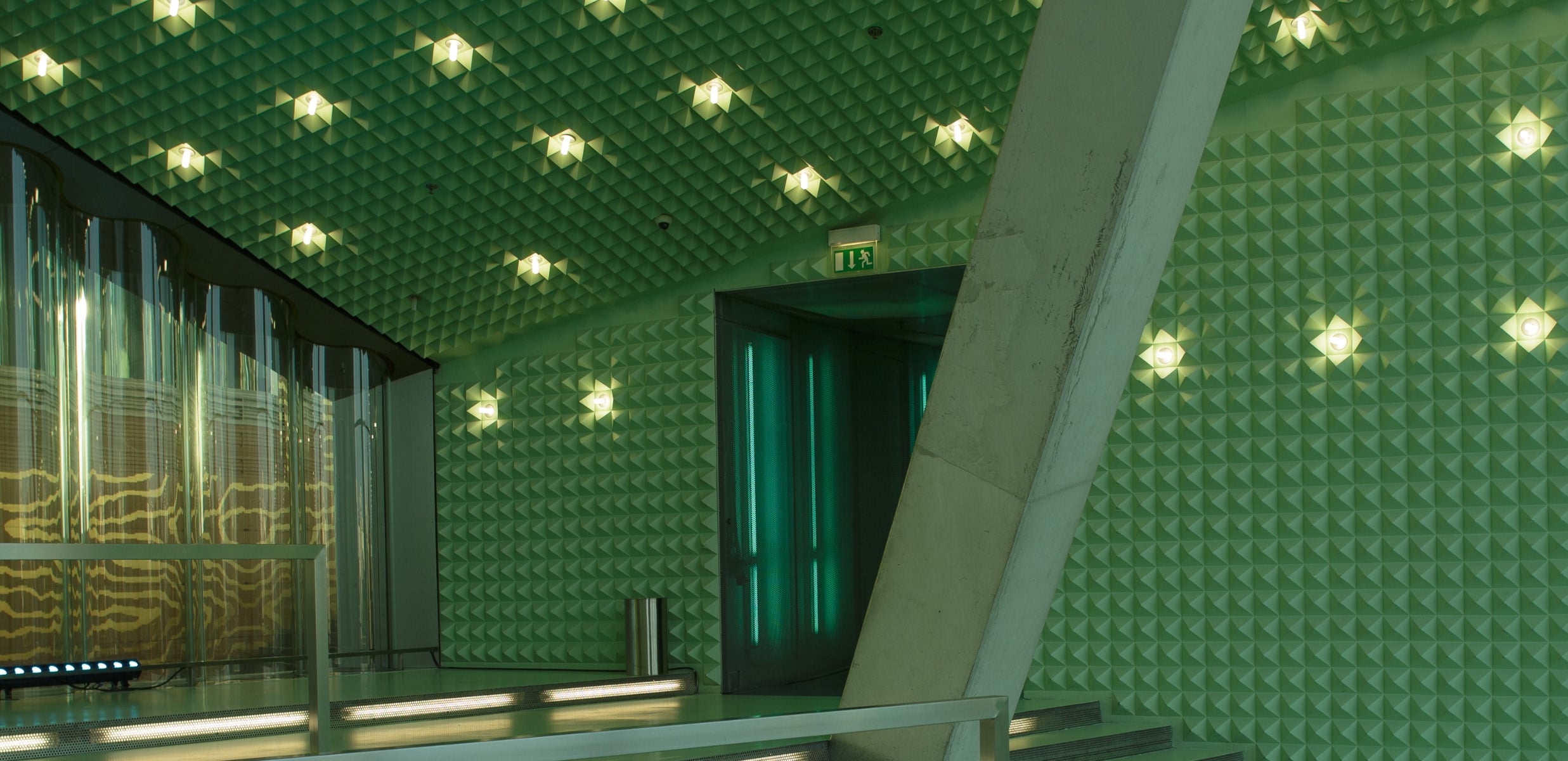
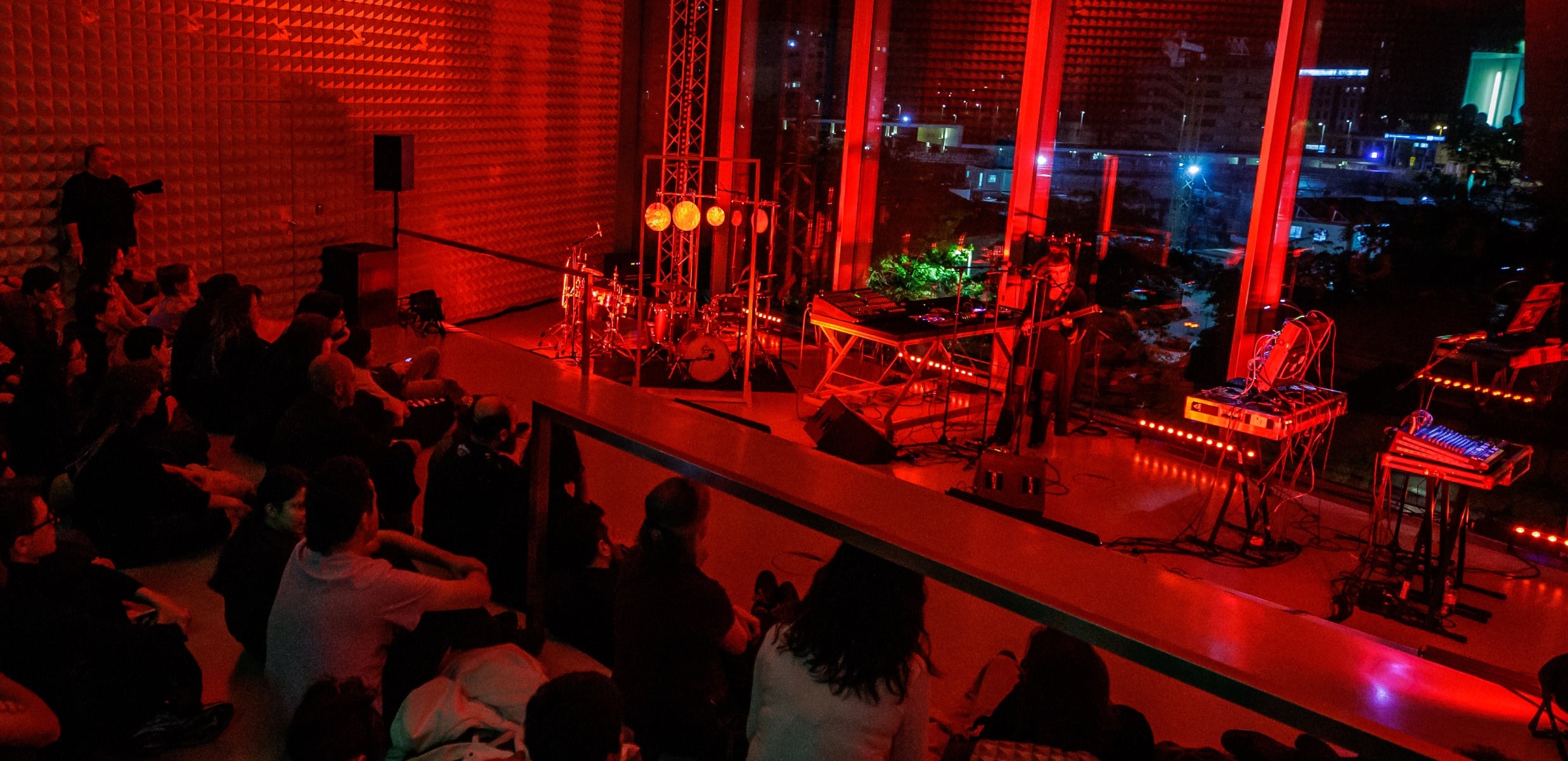
Originally designed for the Educational Service, the Cybermusic Room has since been adapted to new and varied functions. Its cladding materials, rubber and polyurethane foam on one side and exposed concrete on the other, create a special acoustic effect.
The primary purpose of the unique finish on its walls and ceiling (pyramid-shaped) is to create the ideal acoustic conditions for enjoying amplified music. Its cladding materials—rubber and polyurethane foam on one side and concrete on the other—create a unique dual acoustic effect. For this very reason, volume control in this room favors amplification, and acoustic concerts are held on the side facing the window.
A premier space for education that is also used for meetings, concerts, and conferences.
The internal window, overlooking the stage of Sala Suggia, is opened when the performance allows, giving visitors the opportunity to observe the stage, even during daytime concerts and rehearsals.
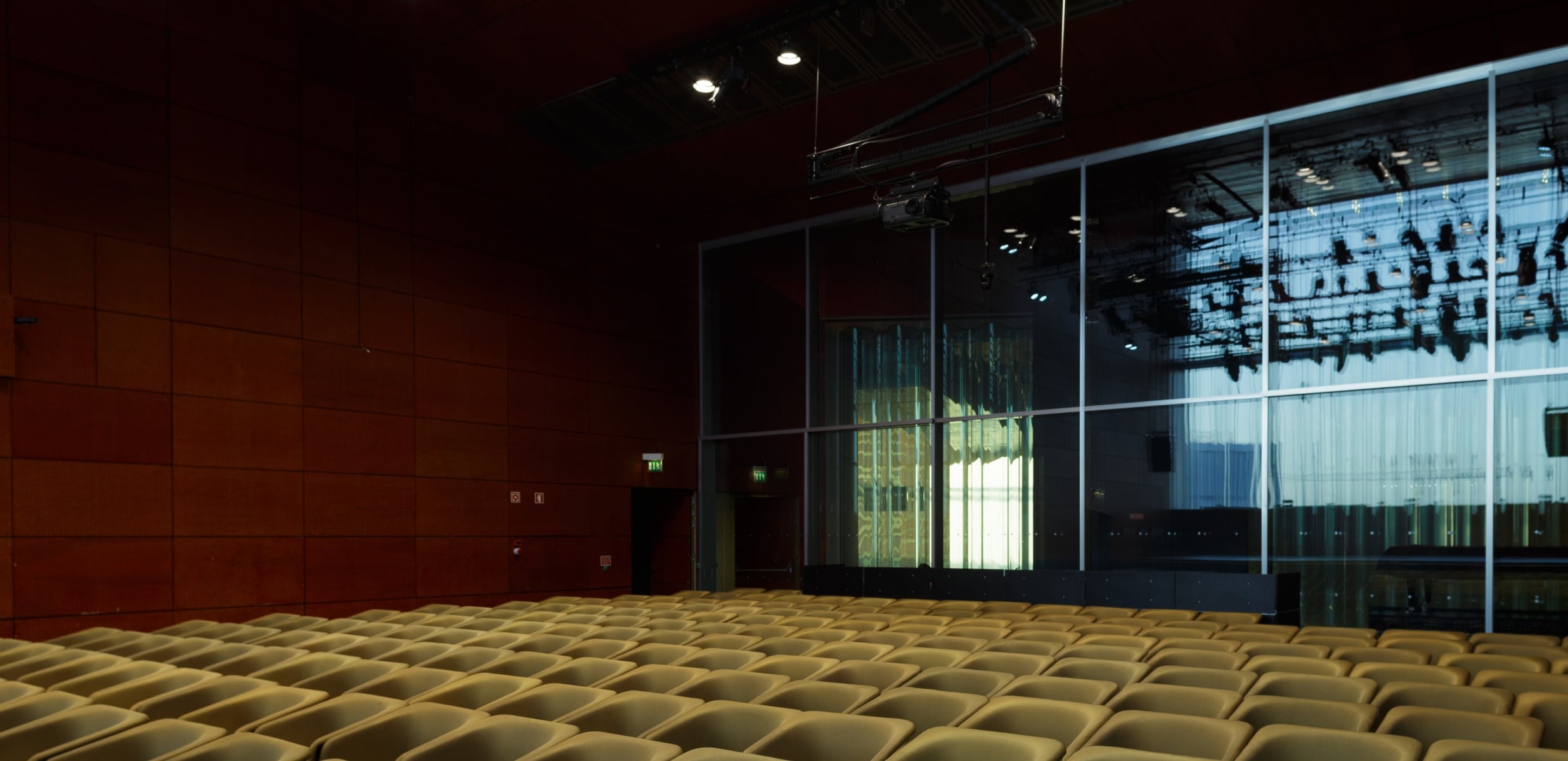
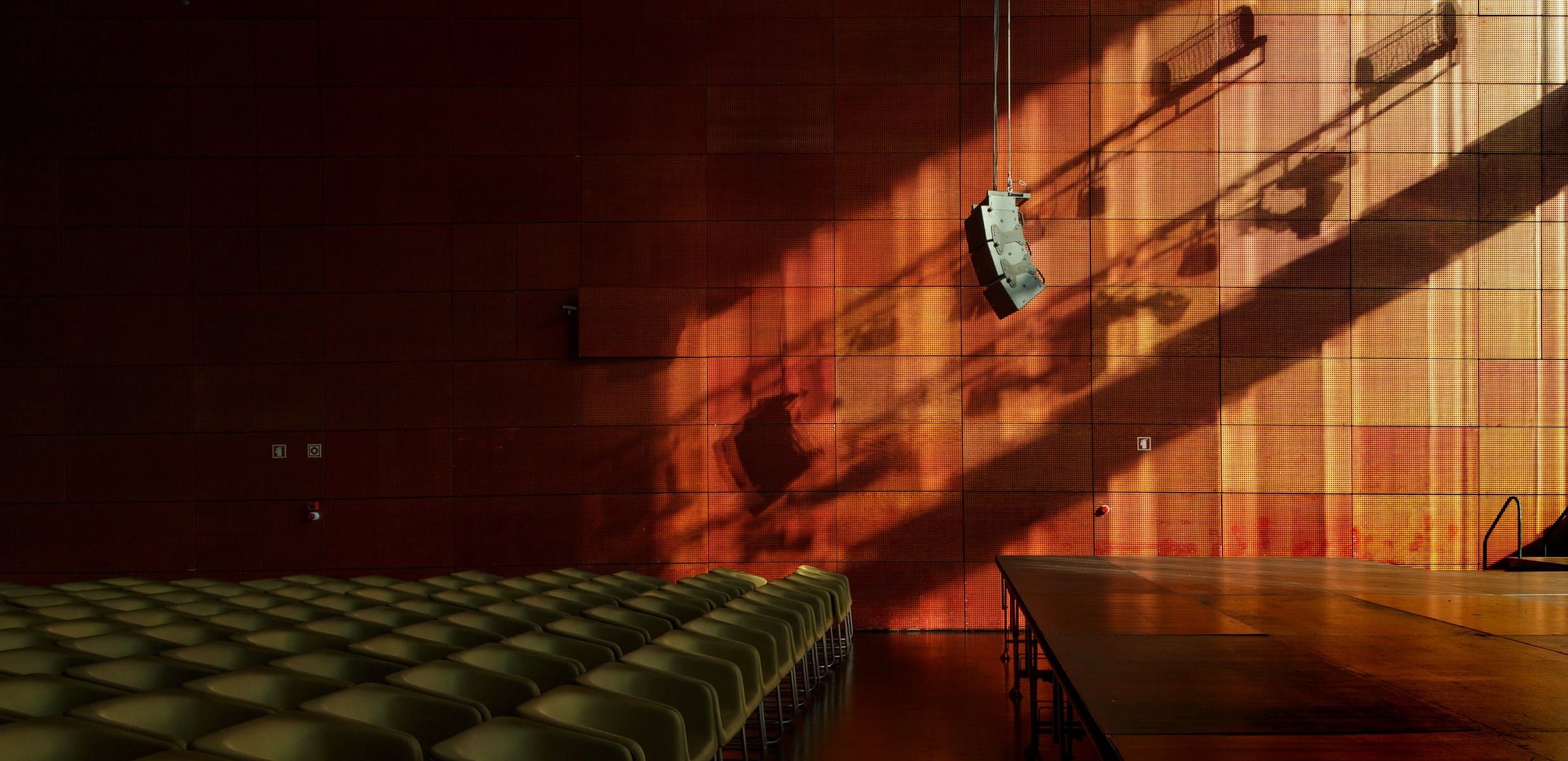
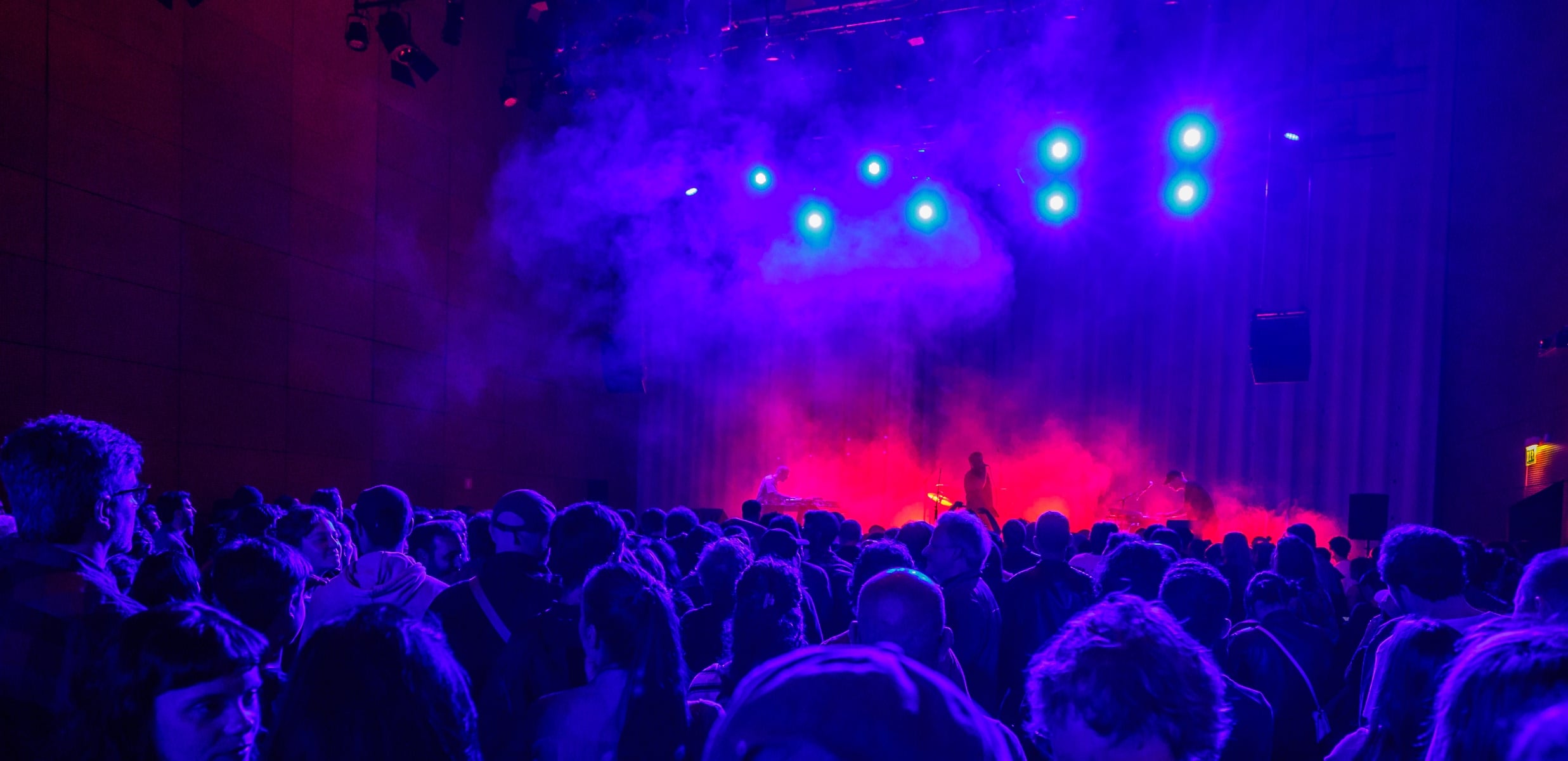
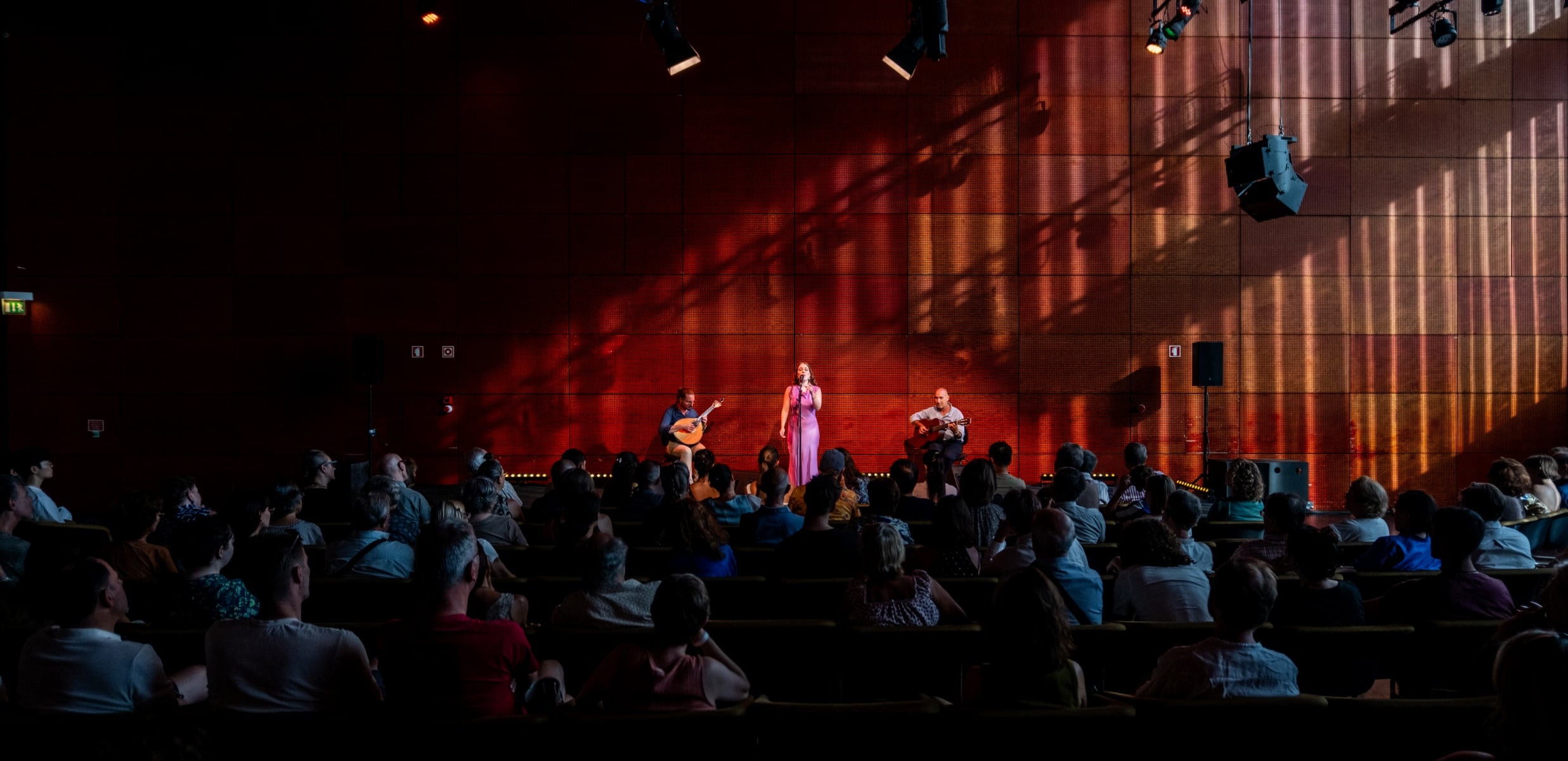
This is the second largest concert hall in Casa da Música. Designed for general versatility, it is able to host any kind of event. Its phenomenal acoustics result from the cladding of walls and ceilings with perforated plywood, which is not painted in a conventional manner with spray or brush but dipped in red paint, giving it a very natural tone with slight nuances.
Stage structures, chairs, lights, the sound system, control tables, in fact everything, can be moved or removed. A huge window facing South, essential to ensure the elegance of this space, means that during the day, much of the natural light in the Suggia Hall is filtered, to take on a reddish tone.
Access is through two glass and aluminium doors, integrated into the foyer partition panels, containing a high degree of sound insulation. These doors slide, assisted by a motor at the bottom, and provide a permanent opening safety system from the inside. The floor of the hall and its foyer is made of industrial oak parquet from France, which is painted black.
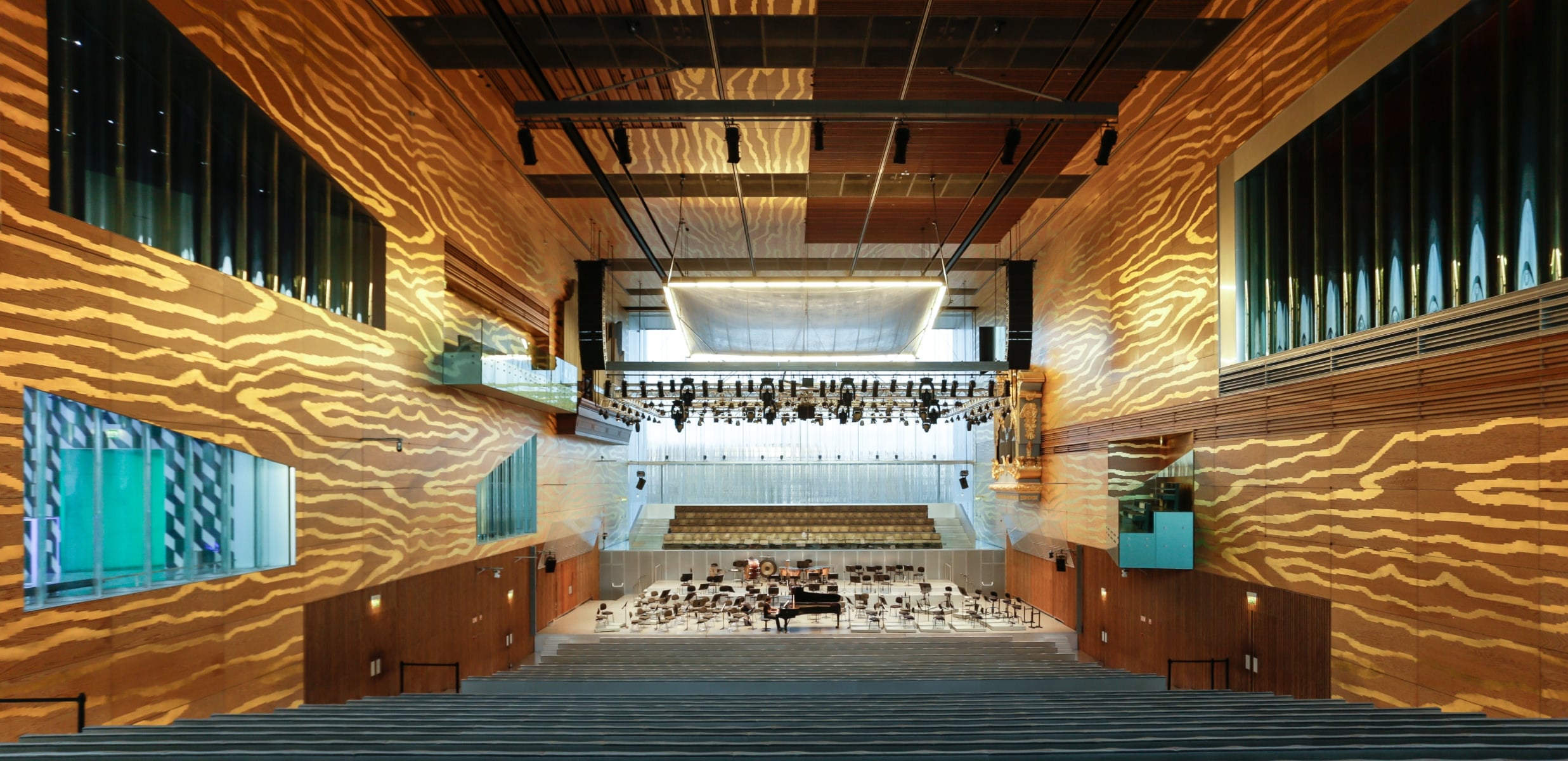
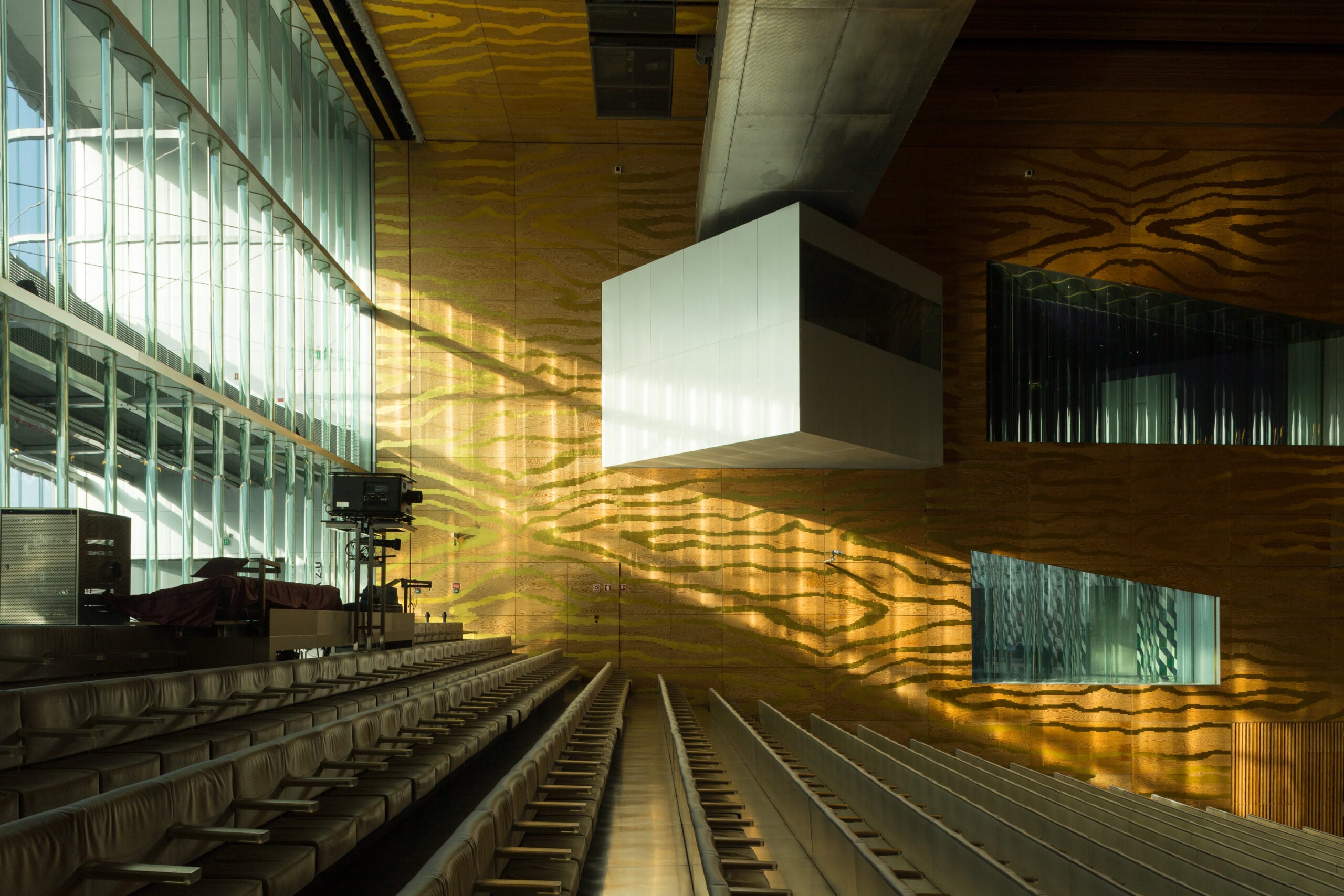
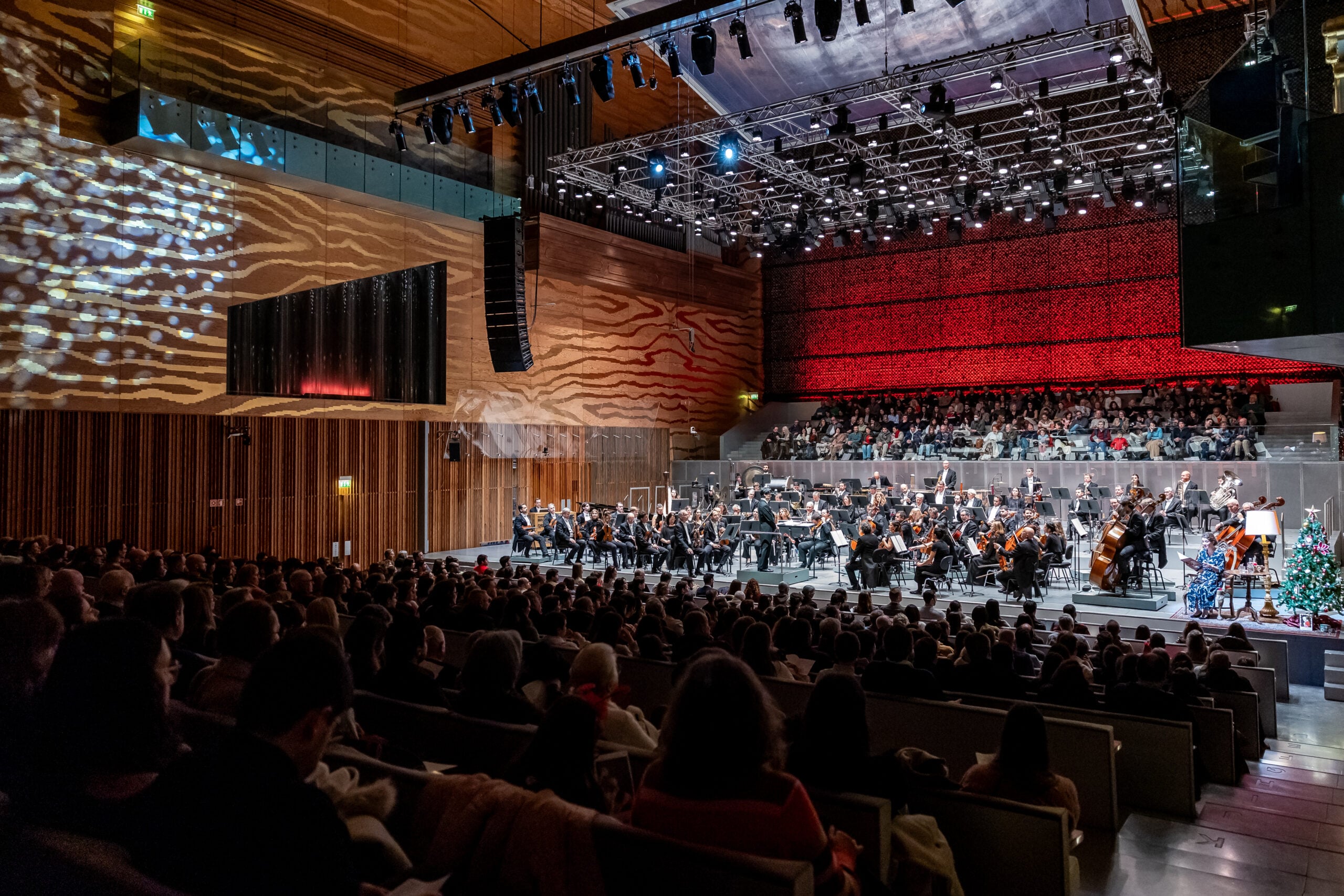
Regarded as the heart of Casa da Música, the Suggia Hall – named in honour of the Porto-born cellist Guilhermina Suggia, one of the world’s foremost exponents of the instrument during the first half of the twentieth century – forms the focal point of the entire building, around which the main circulation routes are organised. With seven windows connecting it both to the exterior and to other internal spaces, offering a variety of perspectives, it is one of the few concert halls in the world where music can be performed entirely in natural daylight.
The decorative arts and key periods in the history of Western music are given particular prominence in the hall, as reflected in features such as the gilded woodcarvings and the pipe organs. These historical references coexist and interact with a series of distinctly contemporary elements, including the canopy, the control room and the maintenance bridge.
The acoustics of the main auditorium are widely recognised as being of the highest calibre. Every finishing material was selected with acoustic performance in mind: Nordic pine plywood for the walls and ceiling, curved glass to compensate for and disperse sound waves, and fabric upholstery for the seating.
The seating layout, with neither side aisles nor a central aisle, allows easy access to every seat. To facilitate movement, the seats incorporate a sliding mechanism that enables a person to pass along an entire row without requiring other audience members to stand up.
Unlike venues dedicated exclusively to classical and symphonic music, Casa da Música also accommodates a wide range of other musical genres. For this reason, the Suggia Hall features technical lighting galleries above the ceiling, as well as a maintenance bridge that spans the auditorium and can move along its length. The even distribution of sound throughout the hall ensures an outstanding listening experience from every seat.
Sala Suggia
Sala Suggia
Sala Suggia
Floors 2 to 4
Capacity: 1,238 seats
CYBERMUSIC
CYBERMUSIC
Originally designed for the Educational Service, the Cybermusic Room has since been adapted to new and varied functions. Its cladding materials, rubber and polyurethane foam on one side and exposed concrete on the other, create a special acoustic effect.
The internal window, overlooking the stage of Sala Suggia, is opened when the performance allows, giving visitors the opportunity to observe the stage, even during daytime concerts and rehearsals.
Floor 4
Capacity: 60 seated places
Orange Room
Orange Room
Developed, like other spaces in the house, with a multifunctional logic, the Orange Room is primarily used to support the Educational Service. It is one of the few spaces in Casa da Música accessible to the public where there is no direct natural light. In compensation, a play of lights has been applied that projects onto the carpeted ramp – the main attraction of the room for children – playing with the concept of a trompe l’oeil window. The orange of the carpet itself conditions the emotions of those entering the room – conveying a sense of proactivity, energy, and assisting the cognitive process of participants in the numerous workshops held there.
In the Orange Room, there is also an instrument called the Sonorium, an integral part of the Casa da Música’s Hot Spots. The Sonorium reacts not only to the presence but also to the position of a body, variables that influence the sounds previously introduced into its system. The choreographed movement of people allows for the creation of melodic spaces, a fact that proves to be very useful in the psychomotor development of young children.
Floor 5
This website uses cookies to provide you with the best possible experience.
For more details on how we utilize cookies, check our Privacy Policy.