Hands for D. Helena
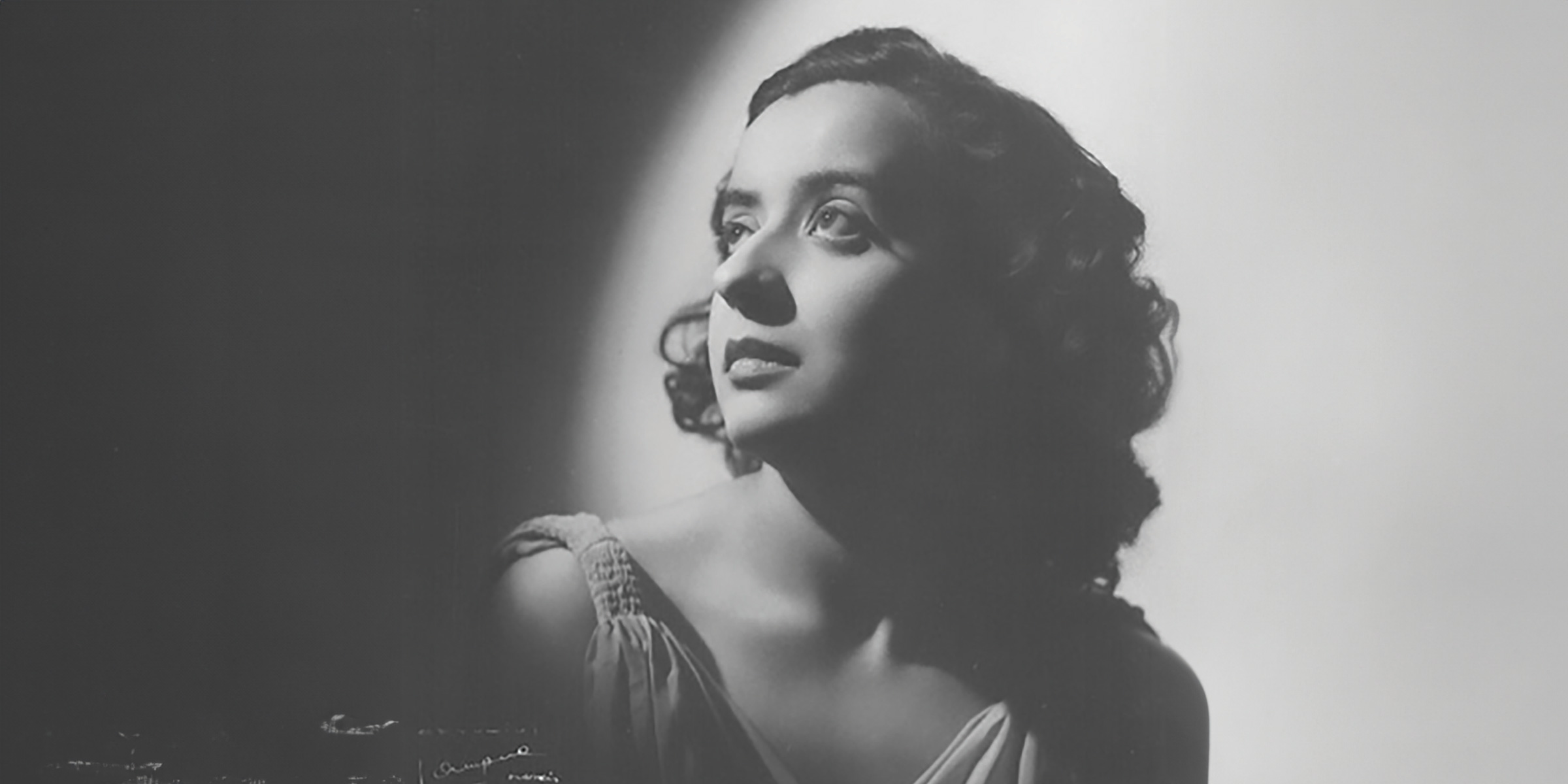
May is written on the piano at Casa da Música – it is the month of Helena Sá e Costa, a towering presence in Portuguese music of the 20th century, a major figure on international stages and a key influence in the training of many of Portugal’s greatest pianists.
Born on May 26, 1913, in Porto, she grew up surrounded by music – “good music”, as she used to say. She was the granddaughter of Bernardo Moreira de Sá, founder of the Porto Conservatory and the Orpheon Portuense, and the daughter of pianists Leonilda Moreira de Sá e Costa and Luiz Costa, who was also a composer. She began studying piano at an early age, initially at home, in an environment rich with artistic stimulation. She later studied under Vianna da Motta and, after graduating with top marks (a perfect score of 20) from the National Conservatory of Lisbon, she trained abroad with Paul Loyonnet, Alfred Cortot, and Edwin Fischer, with whom she gave over 40 concerts.
As a performer, she was widely acclaimed by luminaries of the arts, from Pablo Casals to Lopes-Graça. She enjoyed a remarkable international career across Europe, the Americas, and Africa, performing as a soloist, in chamber ensembles, and with orchestras. “She had absolutely fabulous international recognition”, notes pianist Fausto Neves, a former student of Helena Sá e Costa.
She was responsible for the first complete performance in Portugal of Bach’s The Well-Tempered Clavier and premiered numerous works by contemporary Portuguese composers. Her favorite composers included Mozart, Beethoven, Schubert, Chopin, Mendelssohn, Schumann, Brahms, Debussy, Ravel, and Falla. She also performed works by Seixas, Bomtempo, Luiz Costa, Armando José Fernandes, Croner de Vasconcelos, Carneyro, Lopes-Graça, Joly, and Fernando C. de Oliveira. Alongside her sister Madalena, a cellist, she was devoted to chamber music through the Trio and the Quarteto Portugália.
Helena Sá e Costa’s talent took her to the world’s foremost stages, but her reputation extended beyond the concert hall thanks to her exceptional gift as a teacher. She led masterclasses at the Salzburg Festivals, in Karlsruhe, and in Texas.
In Portugal, she succeeded her mentor Vianna da Motta at the Lisbon Conservatory and also taught at the Porto Conservatory, founded by her grandfather. From 1960 to 1980, she taught at the Estoril Music Courses. In her family home at Largo da Paz, in Boavista – home to two Bechstein pianos – she trained several generations of pianists. There, she was simply known as Dona Helena.
“She knew everything, which was shocking to us”, recalls Fausto Neves. And when she didn’t know something, she could still immediately spot “the most difficult passages” in the pieces students brought to her. A woman of vast culture, she always had a story to share, and a unique way of drawing her students into the world of the instrument. “Musicians go through highs and lows, and sometimes the lows are quite intense. She always gave us a very positive outlook, an energy to keep working”. During many years of his training, Neves experienced what he describes as “a luxurious atmosphere of artistic stimulation, and a kind of pedagogical care that was not scholastic or academic, but instead profoundly nurturing to the spirit and to sensitivity”.
Helena Sá e Costa was outspoken in her criticism of the lack of opportunities for highly trained musicians in Portugal who, after completing their studies, had no clear path forward due to the absence of a structured system. She called for more stages and performance opportunities, because music, she believed, is made to be shared. “This sense of mission – the dissemination of music – is something that really remains from her legacy”, says Fausto Neves, himself now a teacher, speaking of Dona Helena’s ever-present influence.
Her legacy is being honored in style: Three Pianos for Mozart, performed by the highly awarded Julius Zeman, Mona Asuka, and Shun Oi. In another programme from the cycle dedicated to her, Benjamin Grosvenor, the greatest British pianist of our time, brings works by Brahms, Schumann, and Mussorgsky. And the tribute to the eminent pedagogue culminates with hundreds of piano students participating in the Marathon of Keyboardists, which, over two days, fills multiple spaces within Casa da Música.
All under the watchful applause of Dona Helena.