April, a Thousand Keys
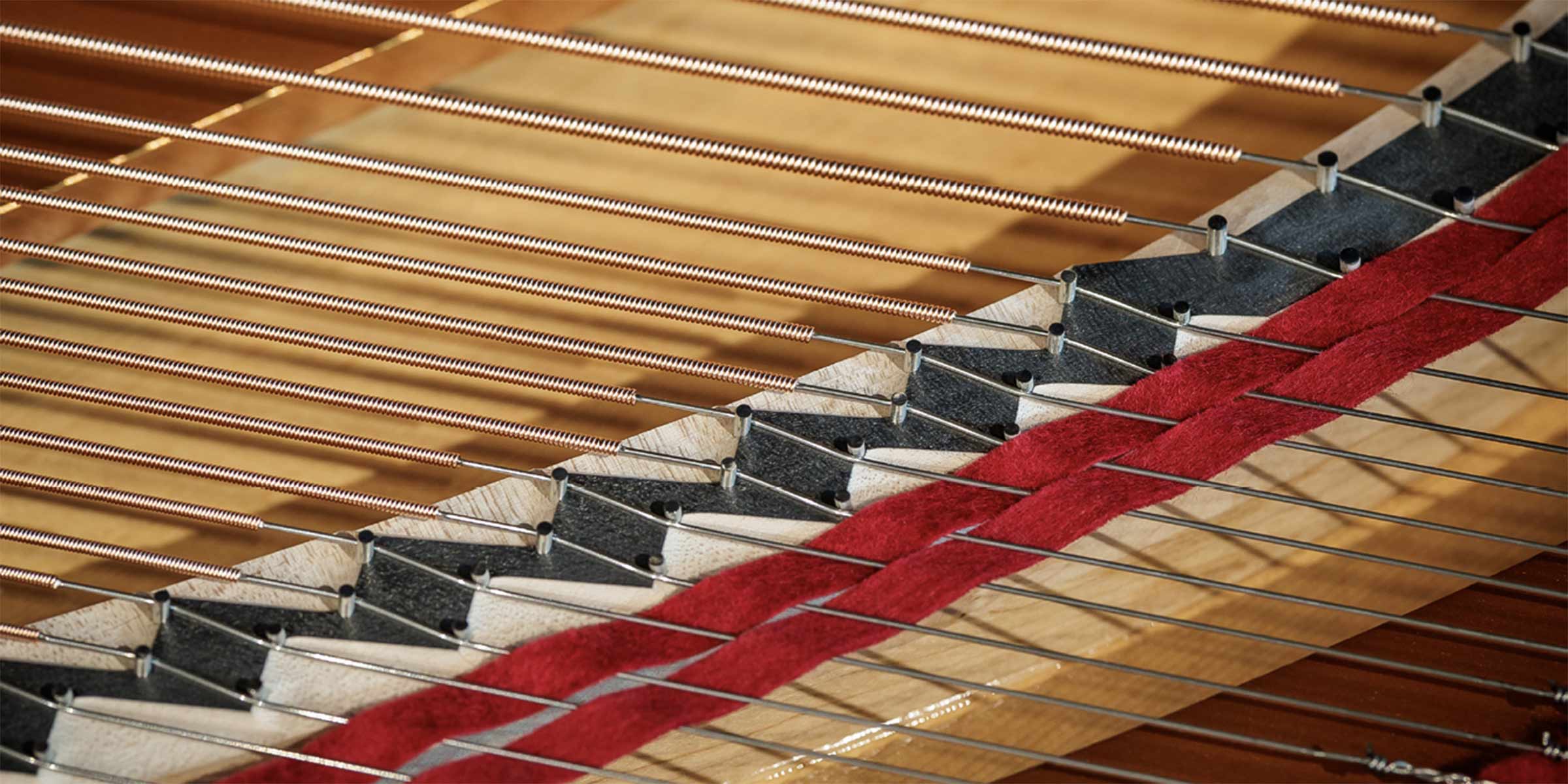
After the equinox, the days grow longer and the programme blossoms into a tapestry woven from the sacred and the earthly, virtuosity and community, memory and invention. Yet one thread runs through the entire month, a presence that asserts itself through the diversity of voices and universes it embodies: the piano. Whether in the intimate realm of chamber song, the monumental scale of the symphonic concerto, or the electric charge of jazz, the keys resonate across every space of Casa da Música, reminding us how a single instrument can contain whole worlds.
The pianistic pilgrimage begins with German pianist Joseph Moog, a star of intense brilliance on the international scene, performing Brahms’s monumental Piano Concerto No. 1 with Orquestra Sinfónica. Alongside him, Stefan Blunier conducts Beethoven’s Symphony No. 2 – that deceptively luminous work, written in the threatening silence of encroaching deafness. A few days later, Ukrainian pianist Vadym Kholodenko takes centre stage at Sala Suggia. A winner of the Van Cliburn Competition, Kholodenko offers a recital of rare transcendence: the spiritual density of Mozart’s Requiem transcribed for piano, and the Romantic pyrotechnics of Berlioz’s Symphonie Fantastique in Liszt’s transcription. In the same week, Martin Helmchen joins Sinfónica for the ultimate Brahmsian challenge: the Piano Concerto No. 2, a work of colossal design where intimacy and epic sweep intertwine. The programme also includes the Hungarian Dances and a rare foray into Schoenberg – proof that the German tradition has never been a museum, but a living organism. Closing the month in splendour, Armenian pianist Tigran Hamasyan fuses jazz, progressive rock, and the folk music of the Caucasus in what promises to be one of the most electrifying concerts of the season. With him, the piano ceases to be merely a piano: it becomes drum, choir, ancestral breath.
But April is also the month when Easter illuminates the programme with works of unparalleled spiritual power. Two days before Good Friday, Bach’s St John Passion comes to life under the baton of French conductor Léo Warynski, in an event uniting Orquestra Barroca and Coro Casa da Música. The pain, suffering, and redemption of the Gospel according to John find in Bach’s music one of their highest peaks. And in a surprising counterpoint, the Digitópia collective offers a reflection on the sacred in the digital age with the concert Techno-Animism, questioning the soul of machines and the faith we place in them.
Orquestra Sinfónica remains a central pillar of the programme. Following the Brahms/Beethoven diptych, Michael Sanderling takes the helm for two complementary programmes. First, Mahler’s wrenching Kindertotenlieder, with German mezzo-soprano Christel Loetzsch, followed by Bruckner’s Symphony No. 1 – that cathedral-like sonority that transports the listener to another plane. Then, in a concert with commentary, the same conductor returns to delve deeper into Bruckner’s work, unveiling the secrets of that Linz premiere which, over a century and a half ago, changed the history of the symphony.
Chamber music occupies distinctive spaces. In the Arab Hall of Palácio da Bolsa, the Soloists of Orquestra Sinfónica evoke the world of Boccherini and Haydn – a unique opportunity to hear the classics in the intimacy of one of the city’s most beautiful venues. The Café com Nata cycle returns with a rare programme: Brahms’s Trio Op. 40, written in the Black Forest under the sign of the horn and morning light, alongside pieces by Koechlin and Robert Kahn. And as part of the Projeto:Canção Festival, soprano Sophia Burgos and pianist Daniel Arkadij Gerzenberg explore themes of immigration and refuge through contemporary chamber song.
Portuguese music takes the stage across multiple geographies. Tito Paris presents his new album Quem está aí?, a celebration of Lusophony weaving together Cape Verde, Brazil, Angola, and Portugal. Zeca Medeiros marks April 25th with songs of intervention and an Atlantic imaginary entirely his own. And Mão Verde, after a decade of concerts for “young and old alike”, bring new songs that speak of ecology, equality, and freedom – because the future belongs to children, and they are invited to (re)think the world.
Jazz and world music claim their natural space. Orquestra Jazz de Matosinhos welcomes Mexican artist Fuensanta, who blends the folklore of Veracruz with free improvisation in a programme crafted for big band. Tinariwen, legends of the “desert blues”, bring the Tuareg cause and their new album The Hoggar to the stage. And from Switzerland, Black Sea Dahu offer music that is raw and cinematic, made to connect and to survive in noisy times.
The nurturing of new generations is a constant presence. Young Musicians Award brings us hornist Telmo Rocha, laureate of the advanced level. Future Rocks continues to reveal emerging bands. And the Geração Casa cycle fills the Café with proposals as diverse as the idiosyncratic folk of ÉME, the contemporary songbook of Miguel Marôco, and the delicate songs of Francisco Fontes. Opening the month, the community project Our Roots brings together trainees and people with special needs in a concert that is, above all, a celebration of listening and collaboration.For the youngest audiences, the offerings are abundant. Sounds from Here and There returns on Sunday mornings. The show Uirapuru, inspired by the Amazon and Villa-Lobos, promises to enchant with dance and music. And the workshop Flying Too Close to the Sun weaves together performing and visual arts, drawing on a text by Viennese modernist Adolf Loos. For the grown-ups (and for anyone who enjoys thinking while laughing), Mário João Alves returns with Einstein’s Doubt-isms and Relativ-ities, a concert-performance exploring the relativity of things, with science, violin, and plenty of humour.
April is also a time to reflect on the future of music. PEMS, the meeting point for music and technology, celebrates its fourth edition with the theme “Technology as Possibility: Music in the Age of Infinite Choice”. Concerts, conferences, workshops, and roundtables explore the role of technology not merely as a tool, but as a horizon of creative, aesthetic, and ethical possibilities.
Within each key of this month lies a world waiting to be discovered. Turning the pages of Partitura is always the best place to start.