The Innumerable Forms of Creative Energy
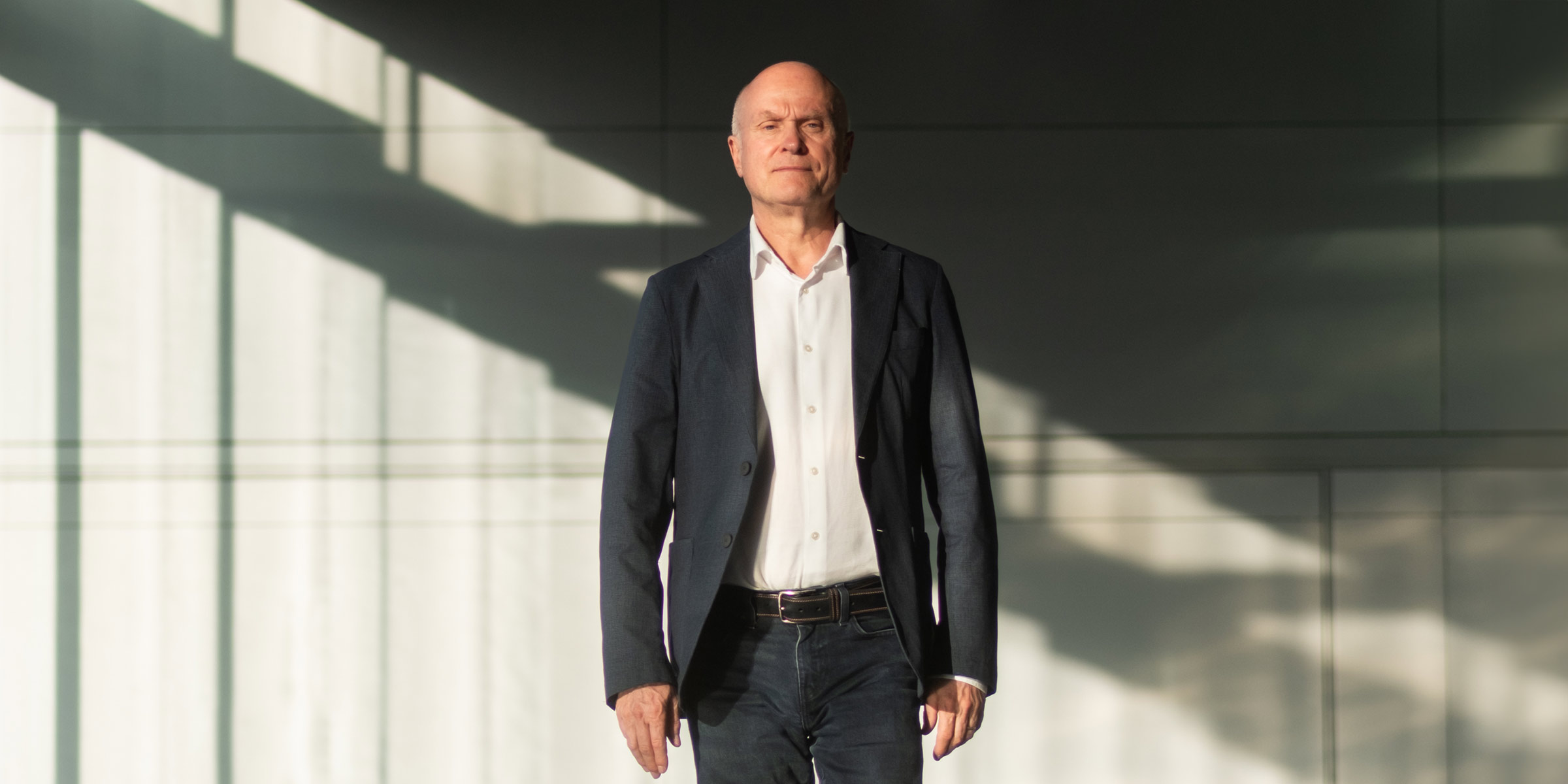
Casa da Música’s artistic director helps us interpret the programming for the new season and discover within it the foundations of his unifying vision for the project. A place open to the synergies of all artistic languages, where music is simultaneously “rooted and universal”.
Roots/Resonances is the anchor concept for the 2026 programming. Can you tell us a bit about it?
The starting point was the desire to present, for the first time in Portugal, the complete Bachianas Brasileiras by Heitor Villa-Lobos – a work that exemplifies the dialogue between the erudite and the popular. Villa-Lobos drew inspiration from Bach, whom he saw as a “Brazilian universal”, to unite European polyphony with the rhythmic and melodic vitality of Brazil’s popular traditions. It all began with a genuine coup de cœur for the Bachianas Brasileiras. Everyone knows the Fifth, but the other eight are rarely performed – and I thought: if this one is so beautiful, the others must also hide treasures. Furthermore, there is something essential in Villa-Lobos: his connection to the rigorous writing of Bach, which inspires him to unite formal discipline with the popular energy of Brazil. It is a bridge between continents and languages – and, naturally, between Portugal and Brazil. This choice also carries an aesthetic meaning. While, in the early 20th century, the Second Viennese School was opening radical and speculative paths, other composers sought to regenerate music from popular traditions – and from that force emerged works like Falla’s The Three-Cornered Hat, Stravinsky’s Petrushka and The Firebird, Bartók’s Concerto for Orchestra, Kodály’s Háry János, Janáček’s Taras Bulba… All these works will be present throughout the season, in dialogue with the universe of Villa-Lobos – which will culminate with his monumental Floresta do Amazonas – and even Brahms, Dvořák, and Mahler, who also drew inspiration from the resonances of popular music without abandoning their romantic language, will be there as echoes of that same creative energy. Ultimately, Villa-Lobos symbolizes what we are seeking this season: music that is both rooted and universal. The 2026 season stems precisely from this historical tension: between the need to overcome a saturated romantic past and the desire to rediscover a vital, organic sense of music. The Roots are that deep connection to collective memory; the Resonances, the living echo of that memory transformed into new languages and new forms of emotion. In essence, what we propose is an attentive listening to the forces that fuel creation: understanding where we come from, what moves us, and how these vibrations – ancient and new – continue to resonate in today’s world.
Traditionally, Casa da Música “rooted” the programming of each new season in a Theme-Country. With your arrival, this has ended. Is there a paradox between the idea of Roots/Resonances and what appears to be a strategic rupture?
In truth, I don’t see a rupture there, but rather an expanded continuity. The idea of Theme-Countries was, for many years, extremely fruitful: it allowed for the exploration of cultural and geographical identities with depth and coherence. What we seek now is to broaden that principle – to go beyond national borders and think in themes that traverse different geographies, eras, and languages. Roots/Resonances does not depart from that logic of connection to identity; it merely amplifies it. Roots can be cultural, popular, spiritual, or aesthetic – and their resonances are found everywhere. Instead of focusing on a single territory, we seek to understand how these roots – including those of popular music – transform, intersect, and inspire new creations. This concept allows us to put into dialogue universes that rarely meet: Villa-Lobos with Bartók, Falla with Bach, erudite music with popular music, heritage with contemporary invention. It is a transversal, inclusive vision that reflects the very identity of Casa da Música – a place where all languages can coexist.
The concept of “resonance” can also be understood as echo, vibration. Have you already defined the “echoes” you would like to provoke this year, inside and outside our doors, or do you prefer they reveal themselves naturally, as a result of the dialogue between roots and innovation?
I prefer to speak of resonance rather than echo, because resonance implies a living, dynamic, transformative relationship – it’s not just the repetition of a sound, but how an initial vibration finds another body and makes it vibrate in a different way. That is exactly what we seek in the 2026 programming: resonances between the works within each concert, between different programs, cycles, and festivals, but also between our resident ensembles, audiences, guest artists, and Casa da Música itself as a cultural institution. These resonances also extend beyond our doors – to external partners, schools, communities, and society at large. More than planning “echoes”, we want to provoke authentic resonances – ones that resonate in the way of experiencing Casa da Música, like a vibration that continues to exist long after the music has ended.
What other new concepts are you introducing and why did you feel the need to implement them?
More than creating new formats, I wanted to propose a way of thinking about Casa da Música as a whole. The goal is to strengthen the dialogue between all its worlds – the resident ensembles, contemporary creation, popular music, jazz, education, and the relationship with society. An essential concept is transversality: the idea that everything communicates. There are no fixed borders between the erudite and the popular, between the concert and the educational project, between the stage and the digital space. Each artistic gesture can generate resonances in other areas, making Casa a living, coherent organism. I felt the need to implement this vision because I believe Casa da Música must be more than a sum of programming – it must be a space for sharing and transformation, where Education, Creation, and Society unite in the same creative energy. This is what I call “living Casa da Música”: a way of inhabiting this place, where the public, artists, and the institution itself breathe together the same impulse of discovery and creation.
Two structuring elements of the programming are cycles and festivals. How are they distinguished and what most suggestive things will they bring us throughout the year?
Cycles are moments of more prolonged listening and reflection – they allow us to follow the thought of a composer or a musical idea over time. In 2026, we will immerse ourselves in the universes of Villa-Lobos, Bach, Brahms, and Hèctor Parra, four visions of music that, each in their own way, explore the relationship between tradition and modernity. All these cycles resonate with the central theme of the year – Roots/Resonances – which proposes looking at origins and understanding how they continue to inspire the present. The cycles also extend into the audiovisual universe, with the Big Screen, featuring cine-concerts and concerts with screen that reinforce the link between sound and image and offer new forms of listening and artistic experience. Festivals, on the other hand, represent the most vibrant and shared side of Casa da Música – moments of intensive programming that, during a concentrated period, mobilize the Resident Ensembles, the Education Service, creation, popular music, and mediation around a common artistic theme. They are times for meeting and celebration that give rhythm to the programming, creating pulsations throughout the year that make Casa da Música breathe in movement. In 2026, we will have Resonances, Easter Festival, Guitar Days, Echo Rising Stars, Summer Festival, Press Start, Jazz Season, Encounters Festival, Amazonia, and Christmas Festival – all in direct dialogue with the ideas of roots and resonances, between heritage and creation. Each festival transforms Casa da Música into a living cultural center, where the public circulates between rooms and informal spaces, able to experience Casa da Música as a spectator, participant, or explorer. Ultimately, this is what we seek: for each cycle and each festival to mark the pulse of a season that is listened to, celebrated, and shared – a way of living Casa da Música intensely.
In the chapter on artistic residencies, there are also novelties to note. Until now, the Composer in Residence was chosen for one season, but, for the first time, the Catalan Hèctor Parra will assume the role for two years. Also unprecedented is the attribution of a residency to an artist from an area other than music – in this case, the Brazilian Bianca Dacosta. What should we read into these reformulations and how do the aforementioned choices integrate into the programming?
I believe one year of residency is insufficient to create a true bond with Casa da Música. A composer in residence needs time to integrate into the life of the institution, get to know the musicians, the teams, the audience, but also participate in the city’s cultural fabric, give masterclasses, inspire other artists. All of this requires continuity – it is a maturation process that only makes sense over duration. Therefore, Hèctor Parra’s presence for two years is a natural choice. He is a composer of great depth and imagination, and this extended time will allow his music to resonate in various contexts: symphonic, chamber, educational, and even digital. As for Bianca Dacosta, I find it natural for a visual artist to be associated with musical productions – especially in an iconic building like Casa da Música, where space, light, and sound constantly dialogue. Her presence will allow for the crossing of languages and audiences, creating new ways of looking and listening. Like Hèctor Parra, Bianca Dacosta will also participate in the cultural life of Porto, in meetings with the public and the local artistic community. Both represent what we are seeking: artists who live Casa and make Casa live.
The programming traverses many territories: from Baroque to jazz, from fado to electronic music. What importance does the mixing of languages have in your curatorial project?
More than a mix, it is an aggregation around the same project. All aesthetics enter into resonance – it’s something natural for me. Baroque, jazz, fado, or electronic music are not separate worlds, but different forms of the same creative energy. Ultimately, this diversity is not accidental: it is the signature of Casa da Música.
Your direction also includes the Education Service. How does this area articulate with the idea of roots and resonances? And, working with such diverse audiences – children, families, seniors, people with special needs – what dimension of inclusion do you seek to reinforce?
The education project is central and transversal to the programming, and for this reason, concerts for families and for different communities now integrate the season brochure. Many of our proposals are in direct dialogue with the year’s themes, reflecting the idea of roots and resonances also on a pedagogical level. We work with very varied audiences, and the goal is to reinforce a truly inclusive and approachable Casa da Música. To this end, we have created meeting formats – musical preludes, talks and encounters after concerts, as well as convivial moments like Café com Nata – that bring artists, music, and the public together in a natural and accessible way.
In an analogous manner, the season involves artists and projects from various geographies – from Latin America to Eastern Europe, from Asia to Lusophone Africa. Is this the affirmation of an increasingly global Casa da Música?
Without a doubt. Music is universal in its diversity, and so are artists. Art speaks of the poetry of the World’s soul. Openness to the world is part of the identity of Casa da Música. But, speaking of roots, it is equally important to affirm a strong presence of Portuguese artists, valuing the creation that is born here and dialogues with what arrives from abroad. This combination – local rootedness and global horizon – is essential for the artistic project we want to build.