PEMS (Porto Electronic music Symposium) 2026
O PEMS 2026 (Porto Electronic Music Symposium), organizado pela Casa da Música através da Digitópia, é a quarta edição deste ponto de encontro dedicado à criação artística, à performance e à reflexão crítica sobre a relação entre música e tecnologia.
Ao longo dos últimos anos, o PEMS tem-se afirmado como um espaço de escuta, partilha e experimentação, reunindo artistas, investigadores, estudantes e público interessado num ambiente aberto e informal. Com a participação de convidados nacionais e internacionais, o programa inclui concertos, keynote, oficinas, mesas-redondas e instalações.
O tema desta edição — Technology as Possibility: Music in the Age of Infinite Choice — propõe uma reflexão sobre o papel da tecnologia não apenas como ferramenta, mas como um campo expandido de possibilidades criativas, estéticas e éticas. Num momento em que a inteligência artificial, os sistemas generativos e as tecnologias interativas multiplicam as opções disponíveis, o simpósio convida à reflexão sobre as escolhas que fazemos e sobre a forma como estas moldam a criação artística e a escuta contemporânea.
A participação é gratuita, mediante inscrição, e está sujeita a um número limitado de vagas. A inscrição dá acesso a todas as atividades do PEMS. Caso não seja possível participar na totalidade do simpósio, será também possível adquirir bilhetes para os concertos individualmente.
PEMS 2026 (Porto Electronic Music Symposium), organised by Casa da Música through Digitópia, is the fourth edition of this meeting point dedicated to artistic creation, performance and critical reflection on the relationship between music and technology.
Over the past years, PEMS has established itself as a space for listening, exchange and experimentation, bringing together artists, researchers, students and audiences in an open and informal environment. With the participation of national and international guests, the programme includes concerts, a keynote, workshops, roundtables and installations.
This year’s theme — Technology as Possibility: Music in the Age of Infinite Choice — invites reflection on the role of technology not only as a tool, but as an expanded field of creative, aesthetic and ethical possibilities. At a time when artificial intelligence, generative systems and interactive technologies multiply the available options, the symposium encourages reflection on the choices we make and how they shape artistic practice and contemporary listening.
Participation is free of charge, subject to registration and limited availability. Registration grants access to all PEMS activities. If it is not possible to attend the full symposium, individual tickets for the concerts will also be available.

PROGRAM OVERVIEW / PROGRAMA
10 abril
April 10th
21:00 | Opening Concert
Arne Deforce violoncelo
Óscar Rodrigues eletrónica
–
Hèctor Parra …limite les rêves au-delà
11 abril
April 11th
10:30 | Opening Session
10:45 | Keynote: Hèctor Parra
12:00 | Workshop: Hugo Vasco Reis, Trevor McTait and Miquel Bernat
15:00 | Open Forum: “Technology as Possibility”
15:45 | Tour: Sonorium 3.0, Sistema Sonar and EMMA
16:45 | Interval + Showcase
17:30 | Workshop: Igor C Silva
19:00 | Final Concert – Catálogo da Natureza
Filipe Fernandes eletrónica
Luís Costa piano
João Quintela lighting design
Óscar Rodrigues artistic direction
SPEAKERS
Hèctor Parra
Keynote speaker
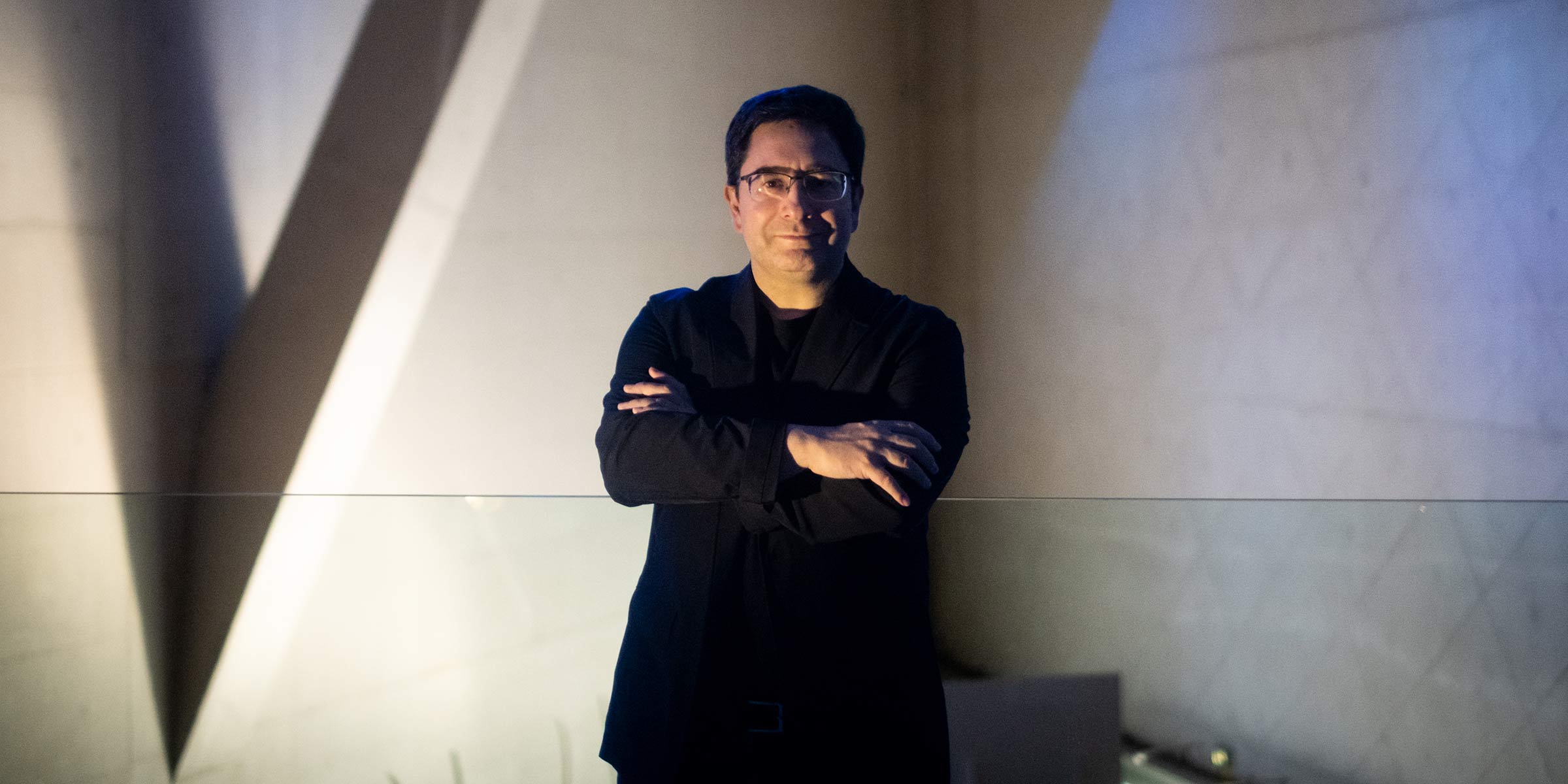
–
KEYNOTES
saturday, april 11, 10:45
When Dreams Become Horizons
In this presentation we analyze in detail the 70 minutes work “…Limite les rêves au-delà” (2017) and how it combines radical instrumental writing with incisive and transformative live electronics, with the aim of taking the listener on a psychoacoustic journey through a musical black hole. We are inspired by relativistic physics and the utopian journey through a gigantic black hole as described by the French physicist Jean-Pierre Luminet, with whom we have actively collaborated on this project and on the orchestral piece Inscape (2018).
WORKSHOPS
saturday, april 11, 12:00
Listening to Silence: Technology, Attention and the Sonic Environment
Nesta oficina, o compositor Hugo Vasco Reis apresenta o enquadramento artístico do Sonic Figures Project, desenvolvido em colaboração com Trevor McTait (viola) e Miquel Bernat (percussão). O projeto parte de gravações de campo realizadas em diversos contextos — incluindo estruturas construídas, espaços subterrâneos, árvores, ambientes subaquáticos e fenómenos eletromagnéticos — explorando de que forma a tecnologia pode mediar a nossa escuta do ambiente sonoro.
Partindo das reflexões de R. Murray Schafer sobre os limites da perceção auditiva, a oficina aborda o silêncio não como ausência, mas como um campo de intensidade e potencial sonoro. Através de exercícios de escuta, momentos de discussão e um breve momento performativo que combina viola, percussão e eletrónica, os participantes explorarão como diferentes tecnologias — microfones, sistemas de amplificação e dispositivos de gravação — podem transformar a nossa relação com fenómenos sonoros subtis.
Mais do que revelar sons “escondidos”, a sessão propõe a escuta como prática de atenção e mediação, convidando os participantes a relacionar-se com o ambiente sonoro de novas formas.
Com performance da peça In Case Of Change, para Kalimba e eletrónica. Percussão: João Miguel Braga Simões
In this workshop, composer Hugo Vasco Reis introduces the artistic framework of the Sonic Figures Project, developed in collaboration with Trevor McTait (viola) and Miquel Bernat (percussion). The project is based on field recordings captured across diverse environments — including structures, underground spaces, trees, underwater contexts and electromagnetic phenomena — exploring how technology can mediate our listening to the sonic environment.
Drawing on reflections by R. Murray Schafer on the limits of auditory perception, the workshop approaches silence not as absence but as a field of sonic intensity and potential. Through listening exercises, discussion and a short performative moment combining viola, percussion and electronics, participants will explore how different technologies — microphones, amplification and recording devices — can transform our relationship with subtle sonic phenomena.
Rather than revealing hidden sounds, the session proposes listening as a practice of attention and mediation, inviting participants to engage with the sonic environment in new ways.
With a performance of the piece In Case Of Change, for Kalimba and electronics. Percussion: João Miguel Braga Simões
saturday, april 11, 17:30
We Do Love Constraints: Conceptual, Artistic, and Practical Decisions in the Endless Canvas of Composing and Performing with Live-Electronics Tools
As infinitas possibilidades de escrever uma peça para um instrumento acústico solo podem parecer menos vastas do que aquelas que surgem quando a tecnologia entra em jogo — embora isso não seja necessariamente verdade. Em ambos os casos, encontrar uma abordagem artisticamente relevante exige frequentemente um nível semelhante de investigação e experimentação. As decisões artísticas são, em si mesmas, infinitas, independentemente do meio utilizado.
Quando estas duas entidades — instrumentos acústicos e tecnologia — se combinam no mesmo contexto criativo, as possibilidades expandem-se exponencialmente, criando uma paisagem criativa altamente estimulante que inevitavelmente precisa de ser delimitada para permitir a tomada de decisões artísticas concretas. Nesta apresentação, abordo a minha prática composicional na música eletroacústica a partir de uma perspetiva prática, focando-me na relação entre conceitos artísticos e as ferramentas digitais que desenho e utilizo. Através da análise de várias obras, apresento estratégias composicionais e ferramentas digitais desenvolvidas especificamente para cada peça.
The infinite possibilities of writing a piece of music for an acoustic solo instrument might seem less infinite than those available when technology is involved, although this may not be entirely true. In both cases, finding an artistically relevant approach often requires a similar level of research and experimentation. Artistic decisions are inherently infinite, no matter the medium.
When these two entities—acoustic instruments and technology—are combined in the same creative context, possibilities expand exponentially, creating an overstimulating creative landscape that inevitably needs to be narrowed in order to enable concrete artistic decisions. In this presentation, I discuss my compositional practice in electroacoustic music from a practical perspective, focusing on the interplay between artistic concepts and the digital tools I design and use. Through the analysis of several works, I present compositional strategies and custom digital tools developed specifically for each piece.
ROUNDTABLES
saturday, april 11, 15:00
Open Forum: Technology as Possibility
Technology as Possibility reúne artistas, investigadores e participantes do simpósio para um momento de reflexão partilhada sobre as questões centrais desta edição do PEMS. Num contexto em que a tecnologia expande continuamente as ferramentas disponíveis para a criação musical — da eletrónica em tempo real aos sistemas generativos e à inteligência artificial — torna-se essencial pensar não apenas nas possibilidades que emergem, mas também nas escolhas que essas possibilidades exigem.
Partindo das ideias exploradas nos concertos, oficinas e keynote do simpósio, esta sessão assume-se como um fórum aberto, sem painel pré-definido, convidando todos os participantes a integrar ativamente a conversa. Como navegamos um campo criativo marcado por uma abundância quase infinita de opções? Que critérios orientam as decisões estéticas e técnicas? De que forma a tecnologia molda a escuta, o gesto musical e a própria ideia de autoria? E quais são as implicações éticas dessas escolhas num ecossistema artístico cada vez mais mediado por ferramentas digitais?
O fórum propõe um espaço de diálogo coletivo onde diferentes perspetivas — artísticas, técnicas e filosóficas — se cruzam e se transformam mutuamente, afirmando a reflexão como prática partilhada.
Technology as Possibility brings together artists, researchers and symposium participants for a shared moment of reflection on the central questions of this year’s PEMS. At a time when technology continually expands the tools available for musical creation — from live electronics to generative systems and artificial intelligence — it becomes essential to reflect not only on the possibilities that emerge, but also on the choices these possibilities demand.
Building on the ideas explored throughout the symposium’s concerts, workshops and keynote, this session takes the form of an open forum, without a predefined panel, inviting all participants to actively contribute to the conversation. How do we navigate a creative landscape shaped by an almost infinite abundance of options? What criteria guide aesthetic and technical decisions? How does technology shape listening, musical gesture and the very notion of authorship? And what ethical questions arise within an artistic ecosystem increasingly mediated by digital tools?
The forum proposes a space for collective dialogue where artistic, technical and philosophical perspectives intersect and evolve, framing reflection as a shared practice.
CONCERTS
friday, april 10, 21:00
…limite les rêves au-delà
O concerto de abertura do PEMS 2026 apresenta …limite les rêves au-delà, de Hèctor Parra, uma obra de grande escala para violoncelo e eletrónica em tempo real, interpretada por Arne Deforce (violoncelo) e Óscar Rodrigues (eletrónica).
Inspirada pela física relativista e pelos estudos do astrofísico Jean-Pierre Luminet sobre buracos negros, a peça propõe uma viagem psicoacústica aos limites do mundo conhecido. Num intenso diálogo entre fenómenos naturais e artificiais, o violoncelo e o dispositivo eletroacústico recriam desde os murmúrios frágeis e orgânicos do espaço até à violência abissal de forças físicas extremas.
Criada em estreita colaboração com Thomas Goepfer, réalisateur en informatique musicale, a obra integra a mediação tecnológica como elemento estrutural da composição.
A escrita dramatúrgica e fisicamente exigente de Parra transforma o recital numa experiência imersiva de escala quase sinfónica — uma verdadeira “cosmologia em som”, onde gesto instrumental e tecnologia se fundem numa exploração sensorial do universo.
The opening concert of PEMS 2026 presents …limite les rêves au-delà by Hèctor Parra, a large-scale work for cello and live electronics performed by Arne Deforce (cello) and Óscar Rodrigues (electronics).
Inspired by relativistic physics and astrophysicist Jean-Pierre Luminet’s studies on black holes, the piece unfolds as a psychoacoustic journey to the limits of the known world. Through an intense dialogue between natural and artificial phenomena, the cello and the electroacoustic system evoke fragile, organic inner murmurs of space as well as the abysmal violence of extreme physical forces.
Created in close collaboration with Thomas Goepfer, réalisateur en informatique musicale, the work integrates technological mediation as a structural element of the composition.
Parra’s dramaturgical and physically demanding writing transforms the recital into an immersive experience of almost symphonic scale — a true “cosmology in sound,” where instrumental gesture and technology merge into a sensory exploration of the universe.
saturday, april 11, 19:00
Catálogo da Natureza
Catálogo da Natureza é um concerto para piano e eletrónica que propõe um percurso através de diferentes modos de escutar e representar o mundo natural. Água, pássaros e paisagem constituem o fio condutor de um programa que atravessa épocas e geografias, reunindo obras de Johann Sebastian Bach, Jean-Philippe Rameau, Franz Schubert, Franz Liszt, Claude Debussy, Maurice Ravel e Luiz Costa.
Ao longo da história da música, a natureza foi simultaneamente metáfora, inspiração e matéria sonora. Neste concerto, essas diferentes perspetivas entram em diálogo com uma abordagem contemporânea que integra eletrónica em tempo real, recolhas sonoras e novos arranjos, expandindo as possibilidades tímbricas e espaciais do piano.
A eletrónica não surge como elemento contrastante, mas como extensão do instrumento acústico — prolongando o gesto, amplificando a ressonância e reconfigurando o espaço de escuta através de um sistema de difusão sonora quadrifónico. A dimensão visual, concebida especificamente para este programa, contribui para uma experiência imersiva que articula memória e presente, explorando possibilidades de reinterpretação e transformação.
Apresentado como concerto de encerramento do Porto Electronic Music Symposium 2026, Catálogo da Natureza propõe uma reflexão sobre a relação entre tradição e tecnologia, repertório histórico e mediação contemporânea, convidando o público a redescobrir paisagens musicais familiares através de modos de escuta expandidos.
Catálogo da Natureza is a concert for piano and electronics that proposes a journey through different ways of listening to and representing the natural world. Water, birds and landscape form the guiding thread of a programme that traverses different periods and geographies, bringing together works by Johann Sebastian Bach, Jean-Philippe Rameau, Franz Schubert, Franz Liszt, Claude Debussy, Maurice Ravel and Luiz Costa.
Throughout the history of music, nature has served simultaneously as metaphor, inspiration and sonic material. In this concert, these historical perspectives enter into dialogue with a contemporary approach that incorporates live electronics, field recordings and new arrangements, expanding the timbral and spatial possibilities of the piano.
Electronics are not presented as a contrasting element but as an extension of the acoustic instrument — prolonging gesture, amplifying resonance and reshaping the listening space through a quadraphonic sound diffusion system. The visual dimension, created specifically for this programme, contributes to an immersive experience that connects memory and the present moment, exploring the possibilities of reinterpretation and transformation.
Presented as the closing concert of the Porto Electronic Music Symposium 2026, Catálogo da Natureza reflects on the relationship between tradition and technology, historical repertoire and contemporary mediation, inviting the audience to rediscover familiar musical landscapes through expanded modes of listening.
OTHERS
saturday, april 11, 15:45
Sonorium 3.0
by Digitópia
Premiere of new soundscapes by David Teixeira da Silva, Ema Ferreira, and Mariana Coelho.
Sistema Sonar – Sonoscopia
with generative software by Digitópia/Filipe Fernandes
This installation features the robotic pipe organ of the Sistema Sonar, controlled by a new generative software system developed by Filipe Fernandes for Digitópia.
The Sistema Sonar is based on the idea of a universal sonic communication that transcends the traditions and paradigms of Western musical instruments and forms of expression. At the core of this system lies an iconic instrument — the pipe organ — here presented in a robotic version. While inspired by mechanical models that became prominent from the 18th century onwards, this instrument is controlled through computer systems that allow for greater accessibility and flexibility, freeing it from the physical limitations of the human body and enabling a focus on purely musical expression.
Through this liberation from physical constraints, it becomes possible to rethink and expand the boundaries of musical creation, making it accessible to musicians of all ages, non-musicians, and people with reduced mobility.
Sistema Sonar is, by definition, a system in constant evolution and discovery. Its signals are reflected in new “satellites,” pointing towards an ever-expanding and still unknown musical universe.
EMMA – Electromyographic Music Avatar
João Pedro Coimbra, Henrique Portovedo, Luís Aly, Sara Carvalho.
EMMA — Electromyographic Musical Avatar is a wireless digital musical instrument that transforms the performer’s body into a musical controller. Developed within an ongoing PhD in Music at the University of Aveiro (Portugal), EMMA uses surface electromyography (EMG) sensors placed on the forearm to capture the electrical activation of muscles controlling all fingers. These signals are transmitted wirelessly and mapped in real time to sonic parameters such as pitch, timbre, spatialization, and recording processes. By enabling the control of electronic sound through muscular gestures, EMMA investigates new relationships between bodily movement, energy, and musical expression.
João Pedro Coimbra is a Portuguese composer, researcher and performer working at the intersection of music, technology and performance. He holds a Master’s degree in Theory and Composition from ESMAE (Porto) and is currently completing a PhD in Music at the University of Aveiro as a fellow of the Portuguese Foundation for Science and Technology (FCT).
His research focuses on embodied interaction and digital musical instruments, and led to the development of EMMA (Electromyographic Musical Avatar), a wireless instrument that translates muscular signals into musical control. His work has been presented at international conferences and published in academic contexts. Alongside his academic work, he maintains an active artistic practice as a composer and performer across electronic music, songwriting and audiovisual media.
saturday, april 11, 16:45
Photosensitive Synthesizer
Credits: David Amaral
O Sintetizador Fotossensível é um instrumento eletrónico controlado pela luz. Baseado em síntese por wavetable, o seu timbre é continuamente moldado pela intensidade luminosa captada pelos diferentes módulos do instrumento.
Durante a demonstração, os participantes são convidados a interagir diretamente com o sistema — cobrindo os sensores com as mãos ou incidindo luz sobre eles — explorando assim as transformações sonoras geradas pelas variações de luminosidade.
The Photosensitive Synthesizer is an electronic instrument controlled by light. Based on wavetable synthesis, its timbre is continuously shaped by the intensity of light captured by the instrument’s different modules.
During the demonstration, participants are invited to interact directly with the system — covering the sensors with their hands or directing light onto them — in order to explore the sonic transformations generated by variations in luminosity.